Water in a kayak, canoe, or small boat can quickly become a safety concern, especially when an electric pump is unavailable or impractical. The best manual bilge pumps offer dependable, human-powered water removal without batteries, wiring, or complicated installation.
This roundup compares 10 options across compact paddling pumps, higher-capacity boat pumps, and emergency-ready designs. We focus on the features that matter most on the water: pumping performance, hose setup, portability, durability, and ease of use.
Contents
- Best 10 Manual Bilge Pumps Picks for 2026
- Reliable Compact Choice – SeaSense Hand Bilge Pump
- High-Output Deck Pump – Whale Gusher Urchin
- Floating Paddler Pick – Pelican Paddlers Bilge Pump
- Visible Emergency Option – Manual Bilge Pump for Boats
- Compact Classic – Attwood 8 GPM Hand Bilge Pump
- Emergency Siphon – HIKULA Portable Kayak Bilge Pump
- Long-Reach Workhorse – SeaSense Self-Priming Hand Bilge Pump
- Fast-Action Favorite – 39-Inch Hose Manual Bilge Pump
- Compact Emergency Pick – Reversible-Hose Bilge Pump
- Best Simple Pick – Large 5-Foot Hose Bilge Pump
- How We Picked the Best Manual Bilge Pumps
- Quick Comparison
- Key Buying Factors for Manual Bilge Pumps
- Who Should Buy Which Manual Bilge Pumps?
Best 10 Manual Bilge Pumps Picks for 2026
Reliable Compact Choice
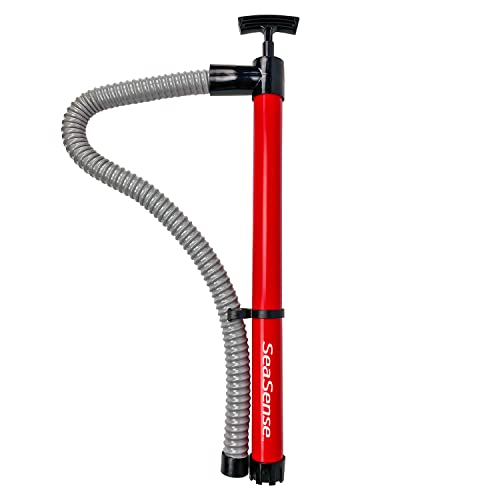
- Self-priming pump with 1.01 gpm flow
- Removable 18-inch hose
- Compact, corrosion-resistant plastic build
Best For: Small boats, kayaks, and canoes
High-Output Deck Pump

- Up to 14.5 gpm flow rate
- 13-foot maximum lift
- Fits 1-inch or 1½-inch hoses
Best For: Larger boats and faster manual pumping
Floating Paddler Pick
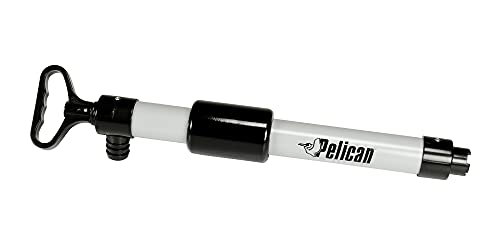
- Foam sleeve adds grip and flotation
- Lightweight 0.76-pound design
- Resists water, corrosion, and shock
Best For: Kayaks, canoes, and paddling safety kits
Visible Emergency Option
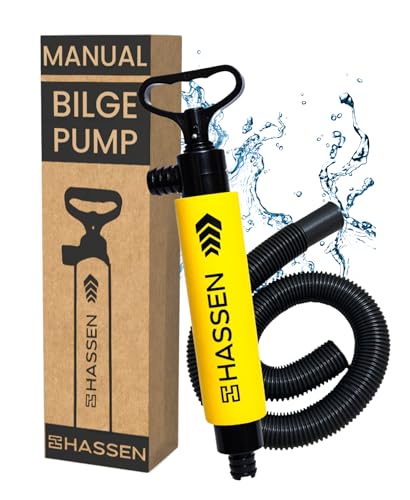
- Bright foam coating improves visibility
- Floating, non-slip design
- Includes a 34-inch hose
Best For: Emergency kits and versatile water removal
Compact Classic

- 8 GPM manual water-removal capacity
- Impact-resistant plastic with floating grip
- Removable 32-inch hose for small craft
Best For: Kayaks, canoes, and small boats
Emergency Siphon
HIKULA Portable Kayak Bilge Pump

- 20 GPM stated flow rate
- Lightweight, power-free emergency operation
- Leak-resistant seals and reversible hose
Best For: Kayaks, canoes, dinghies, and small boats
Long-Reach Workhorse
SeaSense Self-Priming Hand Bilge Pump

- Self-priming design for water removal
- 24-inch pump with 36-inch hose
- Corrosion-resistant plastic and removable hose
Best For: Small boats, kayaks, canoes, and compact bilges
Fast-Action Favorite
39-Inch Hose Manual Bilge Pump

- Up to 20 GPM pumping performance
- 39-inch flexible discharge hose
- Filter and suction spacers for dirty water
Best For: Kayaks, canoes, small boats, and general emergency water removal
Compact Emergency Pick

- Reversible hose for flexible setup
- 23.4-inch hose reaches boat bottoms
- Lightweight and power-free operation
Best For: Kayaks, canoes, dinghies, and small boats
Best Simple Pick

- Large chamber moves more water per stroke
- Five-foot hose handles deeper water
- Filter and spacers support dirty-water use
Best For: Deeper bilges, flooded areas, pool covers, and larger water-removal jobs
Reliable Compact Choice – SeaSense Hand Bilge Pump
If you need manual bilge pumps for a small boat, kayak, canoe, or emergency kit, the SeaSense Hand Bilge Pump offers a straightforward way to remove collected water. Its self-priming design, removable hose, and compact-reach construction make it practical for routine or unexpected water removal.
Best For: Small boats, kayaks, canoes, and compact storage setups
Pros:
- Self-priming design with a listed 1.01 gpm flow rate
- Removable 18-inch hose simplifies storage
- Ergonomic grip and high-impact handle support comfortable pumping
- Corrosion-resistant plastic construction and 12-month warranty
Cons:
- Its 1.01 gpm flow rate is better suited to smaller water-removal jobs
- The included hose is shorter than the 34-inch hose supplied with some alternatives
The SeaSense is a sensible, portable pick when storage space and ease of use matter more than maximum output. It is especially well matched to kayaks, canoes, and smaller boats.
High-Output Deck Pump – Whale Gusher Urchin
Among manual bilge pumps, the Whale Gusher Urchin stands out for its substantially higher listed output. It is designed for boats up to 40 feet and can handle bilge clearing or wastewater transfer through adaptable hose connections.
Best For: Larger boats and users who prioritize fast manual water removal
Pros:
- Flow rate of up to 14.5 gpm for rapid water removal
- 13-foot maximum lifting height
- Dual-size inlet and outlet accommodate 1-inch or 1½-inch hose connections
- Rotatable pump head supports flexible installation and maintenance
Cons:
- Its on-deck design is less compact than simple handheld pumps
- Requires compatible hose plumbing for installation
- The supplied notes list a 12-volt detail despite identifying the pump as manually operated
The Gusher Urchin is the performance-focused option in this group. Its high flow rate and flexible fittings make it a strong choice for boat owners who need more capacity than a basic hand pump provides.
Floating Paddler Pick – Pelican Paddlers Bilge Pump
The Pelican Paddlers Bilge Floating Hand Pump is one of the more practical manual bilge pumps for kayak and canoe users. Its foam sleeve improves grip while helping the lightweight pump float if it slips into the water.
Best For: Kayakers, canoeists, and paddlers who want a lightweight floating pump
Pros:
- Compact 21-inch design weighs only 0.76 pound
- Foam sleeve provides grip and flotation
- Water, corrosion, and shock-resistant construction
- Listed maximum lifting height of 10 feet
Cons:
- The supplied notes do not specify a flow rate
- Designed primarily for portable paddling use rather than plumbed boat installation
For paddlers, the floating foam sleeve is the defining advantage. This pump is easy to carry and retrieve, making it a useful piece of kayak or canoe safety equipment.
Visible Emergency Option – Manual Bilge Pump for Boats
This manual bilge pump is built around portability and emergency readiness. A bright yellow foam coating makes it easier to spot, while the floating design, soft grip, and included 34-inch hose support quick water removal from boats, kayaks, and other settings.
Best For: Emergency kits, kayaks, boats, and general-purpose water transfer
Pros:
- Bright, high-visibility foam can float if dropped
- Includes a long 34-inch hose
- Soft, non-slip foam grip and ergonomic handle
- Listed for marine, outdoor, home, garden, aquarium, pool, and pond use
Cons:
- The supplied notes do not provide a flow-rate specification
- Its 16.5-inch pump body may require more storage room than shorter handheld designs
- General-purpose construction may be less specialized than a high-output deck pump
The bright floating design makes this a practical backup for situations where visibility and retrieval matter. Its longer hose also adds flexibility for emergency water removal beyond the bilge.
Compact Classic – Attwood 8 GPM Hand Bilge Pump
The Attwood Hand Bilge Pump is a straightforward choice for kayaks, canoes, and small boats. Its manual design delivers an 8 GPM flow rate, while the impact-resistant plastic body, comfort-grip handle, and removable 32-inch discharge hose support practical emergency water removal.
Best For: Kayakers, canoeists, and small-boat owners seeking a simple universal-fit manual bilge pump.
Pros:
- Rated for an 8 GPM flow rate.
- Impact-resistant plastic construction.
- Floating comfort-grip handle.
- Removable discharge hose simplifies storage.
Cons:
- Maximum lifting height is 3 feet.
- Includes a 32-inch hose, which may not suit every setup.
- Backed by a 90-day manufacturer warranty.
With its light 16-ounce design and uncomplicated operation, this Attwood model is a sensible grab-and-go option for smaller craft and routine boating emergencies.
Emergency Siphon – HIKULA Portable Kayak Bilge Pump
The HIKULA Portable Siphon Pump is built for emergency dewatering when there is no power source available. This yellow manual bilge pump has a stated 20 GPM flow rate, waterproof rubber seals, a reversible hose, and a comfortable grip with foam tubing for repeated pumping.
Best For: Kayak, canoe, dinghy, and small-boat users who want a lightweight emergency pump.
Pros:
- Hand-powered operation works without electricity.
- Stated 20 GPM flow rate.
- Rubber seals are designed to resist leaks.
- Lightweight 0.77-pound design with ergonomic grip and foam tube.
Cons:
- Maximum lifting height is 25 inches.
- The 17-inch size may provide less reach than longer pumps.
- The handle may need a small amount of olive oil if it sticks.
The compact dimensions and emergency-focused design make this a convenient manual bilge pump to keep aboard smaller vessels, especially where portability and power-free operation matter.
Long-Reach Workhorse – SeaSense Self-Priming Hand Bilge Pump
The SeaSense Hand Bilge Pump combines self-priming operation with a 24-inch by 36-inch hose for removing water from small boats, kayaks, canoes, and compact bilges. Its corrosion-resistant plastic construction, one-way pumping action, ergonomic grip, and removable hose make it suited to practical water-removal duties.
Best For: Boaters who need a self-priming manual bilge pump with a longer hose for small or confined spaces.
Pros:
- Self-priming design helps start water removal efficiently.
- Includes a 24-inch pump with a 36-inch hose.
- Removable hose supports easier storage.
- Corrosion-resistant plastic with a high-impact ergonomic handle.
Cons:
- At 1.8 pounds, it is heavier than the other listed options.
- The notes do not specify a flow-rate rating.
- Its larger overall design may be less convenient for minimal kit storage.
For users prioritizing reach, self-priming performance, and durable-feeling construction, the SeaSense offers a capable manual bilge pump format for water-related activities and emergencies.
Fast-Action Favorite – 39-Inch Hose Manual Bilge Pump
For boaters looking for practical manual bilge pumps, this hand-powered model combines strong suction with a 39-inch flexible discharge hose. Its self-priming design, intake filter, and watertight seal make it useful for routine boating and unexpected water removal.
Best For: Kayaks, canoes, small boats, and general emergency water removal where a medium-length hose is sufficient.
Pros:
- Moves up to 20 gallons per minute according to the product highlights.
- 39-inch hose directs discharge away from the boat or work area.
- Built-in filter and suction spacers help with dirty water and debris.
- Requires no batteries or electricity and weighs 1.1 pounds.
Cons:
- The 39-inch hose offers less reach than a five-foot model.
- Plastic construction may not suit users seeking a metal pump.
This is a well-rounded choice when portability, straightforward operation, and dependable suction matter more than maximum hose reach. The ergonomic T-handle and wettable watertight seal add useful practicality for emergency use.
Compact Emergency Pick – Reversible-Hose Bilge Pump
This compact option stands out among manual bilge pumps for its reversible hose setup and lightweight design. Measuring 15.5 inches before unfolding, it is easy to handle and store while still providing access to water near the bottom of a small craft.
Best For: Kayaks, canoes, dinghies, and small boats that need a compact emergency dewatering tool.
Pros:
- Reversible hose design supports upward or downward pumping configurations.
- 23.4-inch hose helps reach water in the bottom of a boat.
- Rubber seals are designed to maintain a waterproof seal and suction.
- Lightweight, manual operation requires no power source.
Cons:
- Its compact size provides less reach than the longer-hose alternatives.
- The listed maximum lifting height is 2 feet.
Choose this pump when storage space and portability are priorities. Its reversible hose and two-inlet design add flexibility, though users handling deeper water may prefer a longer model.
Best Simple Pick – Large 5-Foot Hose Bilge Pump
For larger water-removal tasks, this large manual bilge pump pairs an 18.5-inch chamber with a five-foot hose. The bigger chamber is designed to move 50 percent more water per stroke than the standard size, while the extended hose helps direct discharge over a gunwale or out a window.
Best For: Deeper bilges, flooded basements, pool covers, and boaters who want maximum reach and fewer strokes.
Pros:
- Product highlights state up to 25 gallons per minute and 175 cubic inches per stroke.
- Five-foot flexible hose provides useful reach for deeper or more distant discharge.
- Large chamber is designed to move 50 percent more water per stroke than the standard version.
- Built-in filter and suction spacers help limit clogging and loss of prime.
Cons:
- At 1.8 pounds, it is heavier than the smaller model.
- The larger body takes more storage space.
- Plastic construction may be less appealing for those wanting a metal pump.
This is the strongest fit for buyers who value reach and faster water removal over compact storage. Its large chamber and five-foot hose make it especially practical for substantial jobs beyond a small boat bilge.
How We Picked the Best Manual Bilge Pumps
We evaluated these Manual Bilge Pumps for the situations where they are most useful: removing water from kayaks, canoes, dinghies, small boats, and larger vessels when an electric or permanently installed pump is unavailable. Our comparison emphasizes practical specifications and design details, including stated flow rate, hose length, reversible or siphon-style operation, self-priming performance, floating construction, grip comfort, and storage requirements.
Because product specifications and real-world output can vary with water depth, hose routing, valve condition, and pumping speed, advertised gallons-per-minute figures should be treated as useful benchmarks rather than guaranteed results in every situation.
Quick Comparison
| Best For | What to Look For |
|---|---|
| Kayaks and canoes | Compact body, floating construction, and a short or reversible hose |
| Small fishing boats | Comfortable handle, self-priming action, and an adequate hose reach |
| Larger boats | Higher stated flow rate, longer hose, and sturdy construction |
| Emergency storage | Simple operation, corrosion-resistant materials, and compact storage |
Key Buying Factors for Manual Bilge Pumps
Flow Rate and Pumping Effort
A higher advertised flow rate can reduce the time needed to clear standing water, but it does not automatically make a pump the best choice. Compact kayak pumps are easier to store and handle, while larger pumps may move more water per stroke but require more space and effort.
Hose Length and Configuration
Choose a hose long enough to reach the lowest part of the hull and discharge water safely over the side. Shorter hoses suit open kayaks and canoes; longer 32-inch, 39-inch, or 5-foot hoses are more useful in deeper or enclosed bilges. Reversible hoses can add flexibility, but confirm that the connections seal securely.
Portability, Buoyancy, and Storage
A pump should be easy to reach when conditions deteriorate. Floating models are especially valuable for paddlers because they are less likely to disappear if dropped overboard. Check the packed dimensions and keep the pump where it can be accessed without unpacking other safety gear.
Durability and Comfort
Look for corrosion-resistant components, secure hose fittings, a dependable valve system, and a handle that remains comfortable during repeated strokes. A simple design is often preferable in an emergency because it is easier to inspect, clean, and operate.
Who Should Buy Which Manual Bilge Pumps?
Kayak and canoe paddlers should prioritize a compact, floating hand pump with a reversible or manageable hose. Small-boat owners will generally benefit from a self-priming pump with a longer hose and a comfortable grip. Owners of larger boats should favor the highest practical flow rate and longest reach, while still checking that the pump can be stored where it is immediately accessible.
Regardless of size, a manual bilge pump is best viewed as essential backup safety equipment—not a substitute for fixing a leak or maintaining a primary bilge system. Test the pump before each trip, inspect the hose and fittings, and practice using it so water removal remains straightforward when it matters.