The best dry bags for hiking protect clothing, food, electronics, and other essentials from rain, river crossings, splashes, and accidental drops. The right choice depends on how much you carry, how often you need access, and whether you prefer a simple sack or a backpack-style design.
We compared 10 popular options across capacities, packability, closure styles, versatility, and value to help you choose reliable waterproof storage for day hikes, backpacking trips, paddling adventures, and wet-weather travel.
Contents
- Best 10 Dry Bags for Hiking Picks for 2026
- Top Water-Ready Pick – Earth Pak 20L Waterproof Dry Bag
- Best Organization Set – Sea to Summit Lightweight Dry Bag Set
- Best Ultralight Organizer – Osprey Ultralight Waterproof Dry Sack
- Best Transparent Carry Option – HEETA 5L Waterproof Dry Bag
- Best Multi-Size Value – Frelaxy 5-Pack Dry Bags
- Best Large Waterproof Backpack – HEETA 40L Dry Bag Backpack
- Best Compressible 3-Pack – Wise Owl 3-Pack Dry Bags
- Heavy-Duty Pick – OSAH DRYPAK 25L Waterproof Backpack
- Multi-Bag Value Set – 6-Piece Lightweight Dry Bags
- Versatile Floating Pack – STOVER 25L Waterproof Dry Backpack
- How We Picked the Best Dry Bags for Hiking
- Quick Comparison
- Key Buying Factors for Dry Bags for Hiking
- Who Should Buy Which Dry Bags for Hiking?
Best 10 Dry Bags for Hiking Picks for 2026
Top Water-Ready Pick
Earth Pak 20L Waterproof Dry Bag

- Abrasion-resistant 500D PVC construction
- Includes an IPX8 waterproof phone case
- 20L capacity with adjustable shoulder strap
Best For: Hikers and paddlers carrying larger loads in wet conditions
Best Organization Set
Sea to Summit Lightweight Dry Bag Set

- Three sizes: 3L, 5L, and 8L
- Lightweight 70D nylon construction
- Sealed seams and a secure roll-top closure
Best For: Backpackers organizing clothing, food, and small equipment
Best Ultralight Organizer
Osprey Ultralight Waterproof Dry Sack

- Weighs approximately 27 grams
- 3L rectangular shape packs efficiently
- IPX5 waterproof, non-submersible protection
Best For: Ultralight hikers organizing small essentials inside a pack
Best Transparent Carry Option
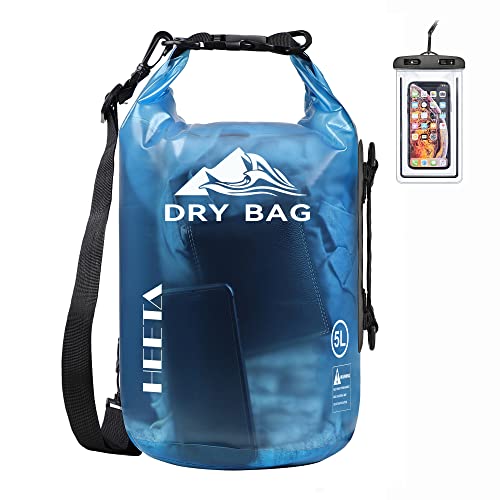
- Transparent body makes contents easy to find
- Adjustable straps and side handle
- Includes a touch-screen-compatible phone case
Best For: Hikers carrying compact essentials who want quick visibility
Best Multi-Size Value
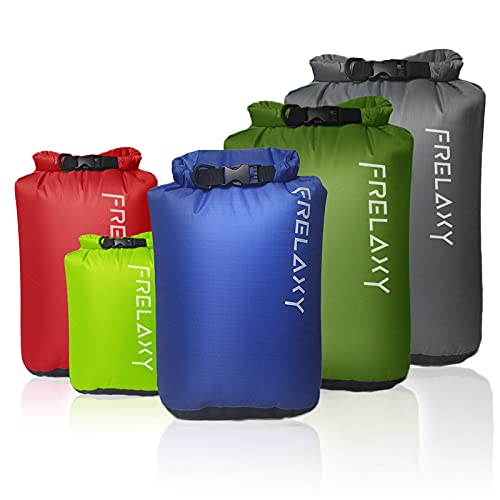
- Five sizes from 3L to 20L
- Ultralight taped-seam polyester
- Color-coded organization for hiking gear
Best For: Organized, lightweight packing across multiple bag sizes
Best Compressible 3-Pack
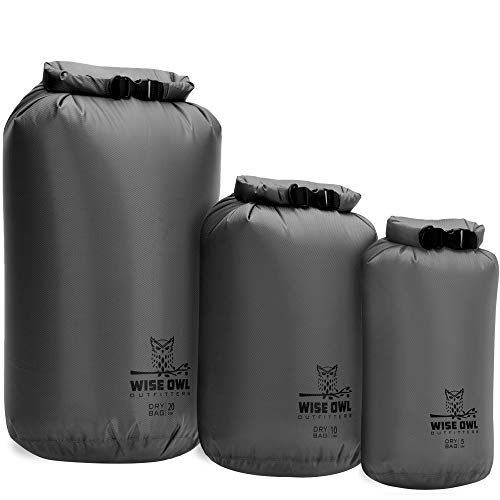
- Includes 5L, 10L, and 20L bags
- Lightweight foldable ripstop nylon
- Roll-top closures and floating design
Best For: Compact, multi-size organization for hiking and travel
Multi-Bag Value Set

- Six sizes from 1.5L to 8L
- Lightweight and foldable for packing
- Color-coded organization for small gear
Best For: Organizing clothing, electronics, and personal items
Versatile Floating Pack
STOVER 25L Waterproof Dry Backpack

- Waterproof, floating roll-top backpack
- Converts to cross-body or hand carry
- Includes IP58-certified phone case
Best For: Day hikes combined with kayaking, fishing, or beach trips
Top Water-Ready Pick – Earth Pak 20L Waterproof Dry Bag
For hikers who also spend time around lakes, rivers, or coastal water, the Earth Pak 20L is a substantial option among dry bags for hiking. Its abrasion-resistant 500D PVC construction, roll-top seal, and included IPX8 phone case provide practical protection for larger loads.
Best For: Hikers and paddlers carrying a day’s gear who want a durable, water-focused dry bag with flexible carrying options.
Pros:
- Durable 500D PVC with a roll-top waterproof closure
- 20L capacity suits clothing, food, and other larger essentials
- Includes an IPX8 waterproof phone case for phones up to 6.5 inches
- Adjustable shoulder strap and multiple size options
Cons:
- The 20L version uses a shoulder strap rather than backpack-style straps
- Heavier than ultralight nylon organizers at 13.6 ounces
This is a strong choice when durability and water protection matter more than minimizing pack weight. For technical backpacking where every ounce counts, a smaller nylon dry bag may be more efficient.
Best Organization Set – Sea to Summit Lightweight Dry Bag Set
The Sea to Summit three-piece set is a practical way to organize clothing, food, and small equipment inside a hiking pack. With 3L, 5L, and 8L sizes, these lightweight dry bags for hiking help separate gear without adding much bulk.
Best For: Backpackers and travelers who prefer sorting gear into several compact, lightweight bags.
Pros:
- Includes 3L, 5L, and 8L bags for flexible organization
- Lightweight PU-coated 70D nylon with DWR finish
- Double-stitched, tape-sealed waterproof seams
- Oval base resists rolling and the white interior improves visibility
Cons:
- The set contains smaller capacities rather than one large dry bag
- Straps are non-adjustable and intended for handling or attachment
This set is especially useful for keeping a backpack orderly and making contents easier to find. Choose another style if you need backpack-style carrying or a single high-capacity sack.
Best Ultralight Organizer – Osprey Ultralight Waterproof Dry Sack
At just 0.06 pounds, the Osprey Ultralight Dry Sack is designed for hikers who want basic waterproof organization with minimal weight. Its 3L rectangular shape can help pack small essentials efficiently in a larger backpack.
Best For: Ultralight hikers needing a compact organizer for small items, clothing, or other pack contents.
Pros:
- Extremely light at approximately 27 grams
- Waterproof-coated fabric and seams with a roll-top closure
- Rectangular shape supports efficient packing
- D-ring provides an attachment or drying point
Cons:
- 3L capacity is limited for bulky gear
- IPX5 protection is waterproof but non-submersible
- No dedicated shoulder or backpack straps
This is a sensible minimalist pick for internal pack organization and rain protection. Its small capacity and non-submersible rating make it less suitable for large loads or situations involving extended immersion.
Best Transparent Carry Option – HEETA 5L Waterproof Dry Bag
The HEETA 5L combines a transparent PVC body with adjustable carrying straps, making contents easy to spot on hikes, beach trips, and other wet-weather outings. For shoppers comparing dry bags for hiking, it offers a compact size and a useful phone case at a budget-friendly feature level.
Best For: Hikers who want quick visibility into a small load and flexible hand-carry or shoulder carrying.
Pros:
- Transparent design makes clothing, bottles, and electronics easy to locate
- Seamless, wear-resistant PVC construction
- Adjustable shoulder straps and a side handle support multiple carry styles
- Includes a touch-screen-compatible waterproof phone case
Cons:
- 5L capacity is best for compact essentials rather than full hiking loads
- The product notes warn against extended underwater use
- PVC construction may be less appealing to weight-focused hikers
The clear body is the standout feature for hikers who dislike digging through a dark bag. It is a versatile small dry bag, though an opaque ultralight nylon model may suit longer backpacking trips better.
Best Multi-Size Value – Frelaxy 5-Pack Dry Bags
For hikers who like to divide gear by category, the Frelaxy set offers five lightweight dry bags in 3L, 5L, 10L, 15L, and 20L sizes. The different colors make it easier to identify food, clothing, and other essentials inside your pack, while the roll-top closures help protect contents from wet conditions.
Best For: Hikers who want organized, lightweight dry bags for hiking in several useful sizes.
Pros:
- Five sizes and colors simplify gear organization.
- Very light polyester construction, with individual bags weighing approximately 35–60 grams.
- Fully taped seams and roll-top closures provide a secure water-resistant seal.
- Rectangular bases pack efficiently, and D-rings allow clipping to a backpack.
Cons:
- Designed to avoid full submersion.
- The set uses a single-compartment sack design without dedicated interior pockets.
This is a practical choice when packing flexibility matters more than carrying a single large waterproof bag. The range of capacities makes it especially useful for sorting layers, snacks, and small camping items.
Best Large Waterproof Backpack – HEETA 40L Dry Bag Backpack
The HEETA 40L combines dry-bag protection with a backpack layout, making it suitable for hikers who need to carry a substantial load while keeping gear protected from rain and splashes. Its heavy-duty PVC body, padded back panel, and adjustable shoulder and waist straps are built for active outdoor use.
Best For: Hikers, travelers, and paddlers who need a roomy waterproof backpack with hands-free carry.
Pros:
- Spacious 40L main compartment accommodates clothing, daily gear, and a laptop or tablet.
- Heavy-duty 500D PVC and reinforced seams support rugged use.
- Padded back panel plus adjustable shoulder and waist straps improve carrying comfort.
- Front zip pocket and waist-belt pockets keep smaller essentials accessible.
Cons:
- At approximately 1.07 kg, it is heavier than lightweight sack-style options.
- The large 40L capacity may be more than needed for short day hikes.
- The product notes include a California Proposition 65 warning.
Choose this model when you want one substantial waterproof pack rather than several packing sacks. It offers more structure, storage, and carrying support, though ultralight hikers may prefer a lighter dry-bag setup.
Best Compressible 3-Pack – Wise Owl 3-Pack Dry Bags
The Wise Owl Outfitters three-pack gives hikers a practical progression of 5L, 10L, and 20L capacities for separating clothing, electronics, food, or wet items. Made from lightweight 190D ripstop nylon, the bags fold down easily when not in use and use roll-top clip closures for wet-condition protection.
Best For: Hikers who want compressible dry bags for hiking, travel, and mixed-size gear organization.
Pros:
- Three useful capacities cover small accessories through larger clothing loads.
- Lightweight, foldable construction takes up minimal pack space.
- Ripstop nylon and a coated finish balance portability with everyday durability.
- Sealed bags can float, and D-rings provide convenient attachment points.
Cons:
- No shoulder straps are included.
- Water protection depends on properly rolling and clipping the top closed.
- The bags have one main compartment rather than internal organization.
This set is a flexible option for hikers who value packability and sorting. The three sizes work well for layering systems and small essentials, while the ripstop fabric helps limit bulk in a tightly loaded backpack.
Heavy-Duty Pick – OSAH DRYPAK 25L Waterproof Backpack
For hikers who need a rugged carry system, the OSAH DRYPAK is one of the more substantial dry bags for hiking. Its 500D PVC construction, welded seams, and roll-top closure are suited to wet trails, rain, and river crossings, while multiple sizes accommodate different gear loads.
Best For: Multi-day hikes, wet-weather adventures, and hikers carrying bulky gear.
Pros:
- Heavy-duty 500D PVC body with high-frequency welded seams.
- Available in 25L, 35L, 55L, and 85L capacities.
- Padded back support, ergonomic straps, chest belt, and safety whistle.
- Useful organization features include bottle holders, inner zip pockets, and bungee cords.
Cons:
- The heavyweight construction may be more than needed for minimalist day hikes.
- Its larger capacity options can encourage overpacking.
This is a strong choice when durability and carrying comfort matter more than ultralight weight. The 25L version suits day trips, while the larger sizes provide room for longer or more equipment-heavy outings.
Multi-Bag Value Set – 6-Piece Lightweight Dry Bags
This six-piece set offers a flexible way to organize smaller loads in your hiking pack. As dry bags for hiking, the assorted sizes help separate clothing, electronics, footwear, and personal items, while the lightweight polyester construction folds down for storage.
Best For: Hikers who want color-coded organization and several compact waterproof storage bags.
Pros:
- Includes six bags ranging from 1.5L to 8L.
- Lightweight, foldable design is easy to carry and store.
- Roll-top closures with quick-release buckles provide a simple seal.
- Different colors make contents easier to identify.
Cons:
- The set is intended for organizing smaller items rather than carrying a full hiking load.
- There is only one compartment per bag.
- The notes do not specify a floating capability.
Choose this set if organization is your priority. The range of capacities works well for dividing gear inside a larger backpack, though it is less suitable as a standalone hiking pack.
Versatile Floating Pack – STOVER 25L Waterproof Dry Backpack
The STOVER 25L combines a backpack harness with waterproof storage and a few convenient extras. Among dry bags for hiking, it stands out for its floating design, adaptable carrying options, front wet/dry pocket, and included IP58-certified phone case.
Best For: Day hikers and multi-sport users who move between trails and water-based activities.
Pros:
- High-frequency seam bonding and roll-top closure are designed to keep contents dry.
- Floats if it falls into the water.
- Can be carried as a backpack, cross-body bag, or by its top handle.
- Includes an IP58-certified waterproof phone case with touchscreen and Face ID compatibility.
Cons:
- The listed 25L version provides less capacity than the available 30L and larger options.
- The front wet/dry pocket is designed for easy access, so it may not offer the same protection as the main compartment.
- At 0.67 kg, it is not the lightest option for weight-conscious hikers.
This pack is a practical middle ground for hikers who also kayak, fish, or visit the beach. Its 25L capacity fits day-use gear, while the flexible carry modes and phone case add convenience beyond basic dry storage.
How We Picked the Best Dry Bags for Hiking
We evaluated these dry bags based on practical trail use rather than capacity alone. Key considerations included the roll-top closure, material and construction, available sizes, portability, carrying comfort, water resistance, and versatility across hiking, camping, kayaking, boating, and travel. We also included multi-bag sets because using separate sacks for clothing, food, electronics, and sleeping gear can make a pack easier to organize.
Product descriptions and listed features were compared for storage options, included accessories such as phone cases, and design differences between traditional dry sacks and backpack-style models. Remember that “waterproof” does not always mean submersible, so follow each manufacturer’s sealing and care instructions.
Quick Comparison
| Best for | Recommended type | What to look for |
|---|---|---|
| Organizing small essentials | 3-piece or 5-piece set | Multiple sizes and lightweight construction |
| Day hikes and everyday use | 5L–20L dry sack | Low weight, compact storage, dependable roll-top closure |
| Wet-weather backpacking | 20L–40L dry backpack | Padded or adjustable shoulder straps and durable fabric |
| Large or bulky equipment | 40L–85L heavy-duty bag | High capacity, reinforced construction, and comfortable carrying |
Key Buying Factors for Dry Bags for Hiking
Capacity and Organization
Choose capacity according to the gear you need to protect, not the size of your hiking backpack. Small bags suit phones, wallets, snacks, and first-aid supplies. Medium sizes work well for spare layers and electronics, while larger models can hold sleeping bags, camp clothing, or bulky equipment. Multi-packs are useful when you want several smaller compartments instead of one large container.
Closure and Water Protection
A roll-top closure is the most common design. It usually requires several tight rolls before the buckle is secured, and the bag may need extra empty space at the top to seal properly. For heavy rain or splash exposure, prioritize a well-constructed closure and avoid assuming any bag is suitable for prolonged underwater submersion.
Weight, Durability, and Comfort
Ultralight materials reduce pack weight but may need more careful handling around sharp rocks and branches. Heavier fabrics generally offer greater abrasion resistance. If you expect to carry the bag separately or use it as a daypack, look for adjustable shoulder straps, reinforced attachment points, and a shape that remains comfortable when loaded.
Useful Extras
Included phone cases, multiple carrying handles, and several size options can improve versatility. However, accessories should not outweigh the basics: a secure closure, suitable capacity, and construction appropriate for your intended conditions.
Who Should Buy Which Dry Bags for Hiking?
Choose a lightweight single sack if you already have a backpack and need simple protection for one category of gear. Pick a multi-pack if organization and flexible sizing matter most. Backpack-style dry bags are better for hikers who want hands-free carrying or need to transport gear independently. For demanding trips, large loads, or frequent use around water, prioritize a heavy-duty model with a higher capacity and reinforced construction.
For most hikers, a medium-capacity bag or a versatile set offers the best balance of protection, organization, and packability. Match the design to your expected weather and handling conditions, then leave enough room to roll the closure securely.