RIX Titan-T3 Thermal Monocular LRF review is best read as a specialist buyer guide, not a casual gadget overview.
If you need thermal spotting with built-in ranging and a compact one-hand format, it has a clearly defined lane.
Contents
Titan-T3 Review Summary
The RIX Titan-T3 is aimed at buyers who care about detection, range estimation, and stable handheld viewing in dark or low-visibility conditions.
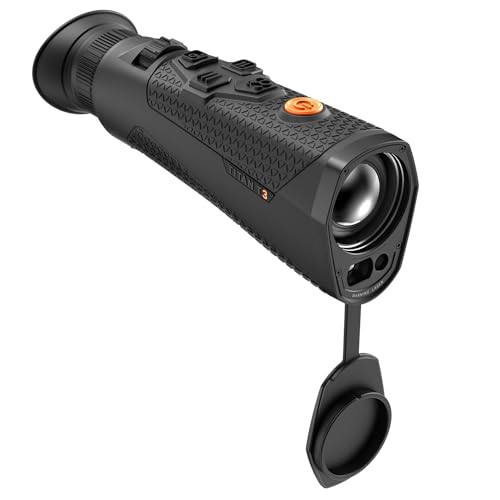
Its strongest appeal is the combination of a 384×288 thermal core, a laser rangefinder, and integrated ballistic calculation in a single monocular that still tries to stay easy to operate with one hand.
That makes it a sensible choice for night hunters, property watchers, and field users who want more than a basic thermal viewer.
It is not a general-purpose consumer device, and the listing reads like equipment for people who already know why thermal and range data matter.
Review Scorecard
| Category | Score | Why it matters |
|---|---|---|
| Thermal detail | 8/10 | The 384×288 sensor and 12 μm pitch give it a credible imaging base for spotting at night. |
| Range utility | 9/10 | Built-in LRF and ballistic calculation add real field value beyond simple viewing. |
| Display quality | 8/10 | The 1920×1080 OLED is a strong spec for a thermal monocular in this class. |
| Handheld usability | 8/10 | One-hand operation and ergonomic controls point to practical field use. |
| Stability | 8/10 | Electronic image stabilization should help when walking or dealing with vibration. |
| Low-light performance | 8/10 | The F0.9 lens is positioned as a light-gathering advantage. |
| Buyer’s fit | 9/10 | The feature set is tightly aligned with serious night observation and hunting workflows. |
Key Features and Specifications of Titan-T3
The Titan-T3 pairs a 25 mm objective lens with a 384×288 thermal sensor and 12 μm pixel pitch.
The listing also cites a 1920×1080, 0.49-inch OLED display, which is notable because display quality often affects how usable a thermal optic feels during long sessions.
It is listed with NETD under 20 mK, up to 1421 yards of detection, and up to 1312 yards of ranging capability through the laser rangefinder.
Those numbers matter because they suggest the device is built for real field identification work, not just close-range novelty use.
Other notable claims include:
- F0.9 25 mm lens for improved light gathering
- One-hand operation with ergonomically placed buttons
- Electronic image stabilization to reduce shake and blur
- RET image enhancement during digital zoom to preserve detail
- Integrated ballistic calculation for range-informed shooting decisions
Taken together, this is a feature stack that favors practical outdoor use.
The headline is not just thermal viewing, but thermal viewing plus measurement and decision support.
Pros and Cons of Titan-T3
Pros
- Combines thermal viewing, laser ranging, and ballistic calculation in one device
- 1920×1080 OLED display is a strong usability detail
- One-hand operation should make it easier to manage in the field
- Electronic image stabilization is useful for movement and vehicle vibration
- F0.9 lens and low NETD support the claim of stronger low-visibility performance
Cons
- The listing is clearly specialized, so it is not a casual or budget-first buy
- Advanced features can add complexity for users who only want basic thermal spotting
- The strongest value depends on whether you will actually use ranging and ballistic tools
- As with most thermal optics, the experience will depend on how well the device fits the buyer’s actual use case
Who Should Buy Titan-T3?
Buy the Titan-T3 if you want a thermal monocular that does more than reveal heat signatures.
It fits users who need to detect, measure, and act on what they see, especially in night hunting or outdoor observation workflows where range data matters.
It also makes sense for users who prefer a compact monocular format over larger mounted thermal systems.
The one-hand operation claim suggests the design is built for active field use rather than stationary viewing.
You should probably skip it if you only need occasional nighttime curiosity use or if a simpler thermal viewer would cover the job.
The Titan-T3 is most convincing when the rangefinder, stabilization, and ballistic tools are part of the actual buying reason.
How the Titan-T3 Fits the Field
Detection and identification
The 384×288 thermal core is the backbone of the Titan-T3.
For a monocular in this class, that is enough to make the device credible for spotting heat sources in darkness, and the 12 μm pitch suggests the imaging system is built for practical detail rather than bare-bones output.
Rangefinding and shot planning
The built-in laser rangefinder is one of the most important parts of the package.
The listing’s integrated ballistic calculator makes the Titan-T3 feel like a tool for users who need to translate what they see into a more informed next step, not just a brighter picture.
Usability in motion
One-hand controls, electronic stabilization, and the ergonomically placed buttons all point in the same direction: the device is meant to be used while moving, adjusting position, or dealing with vibration.
That matters because thermal optics can be frustrating when the interface fights the user.
Display and viewing comfort
The 1920×1080 OLED display is an important comfort factor.
Even when the thermal sensor is the main event, the display influences how easy it is to scan, judge shape, and keep using the monocular without fatigue.
Alternatives to Titan-T3
If you want other thermal or night-vision-adjacent options to compare, these are sensible starting points:
These alternatives are worth checking if you want to compare interface style, sensor class, and how much onboard functionality you actually need.
Some buyers will prefer a simpler thermal viewer, while others will want a more established brand ecosystem.
Is Titan-T3 Worth It?
Yes, if you want a serious thermal monocular with ranging and decision support built in. The Titan-T3 looks best for buyers who will use its full feature set, especially night hunters and field users who benefit from thermal detection, measured distance, stabilization, and ballistic calculation in one compact unit.
If you do not need the rangefinder or ballistic features, the Titan-T3 may be more device than necessary.
But for the right user, the overall package is cohesive and purposeful, which is what makes it worth considering.