Contents
- Fishing Fish Weight Calculator
- What this Fishing Fish Weight Calculator Does
- How to Use the Fishing Fish Weight Calculator
- How the Fishing Fish Weight Calculator Formula Works
- Use Cases for the Fishing Fish Weight Calculator
- Other Factors to Consider When Calculating Fish Weight
- FAQs about the Fishing Fish Weight Calculator
- 1. How accurate is the Fishing Fish Weight Calculator?
- 2. Can I use this calculator for any fish species?
- 3. What if I don’t have girth measurements?
- 4. Is the Fishing Fish Weight Calculator free to use?
- 5. Can I save my calculations?
- More calculators like the Fishing Fish Weight Calculator
Fishing Fish Weight Calculator
What this Fishing Fish Weight Calculator Does
The Fishing Fish Weight Calculator is an essential tool for anglers and fishing enthusiasts looking to estimate the weight of their catch. By simply inputting the fish’s length and girth measurements along with the species, this calculator provides an accurate estimate of the fish’s weight. This information is crucial for various reasons, including determining the health of the fish, ensuring compliance with fishing regulations, and making informed decisions about catch-and-release practices.
How to Use the Fishing Fish Weight Calculator
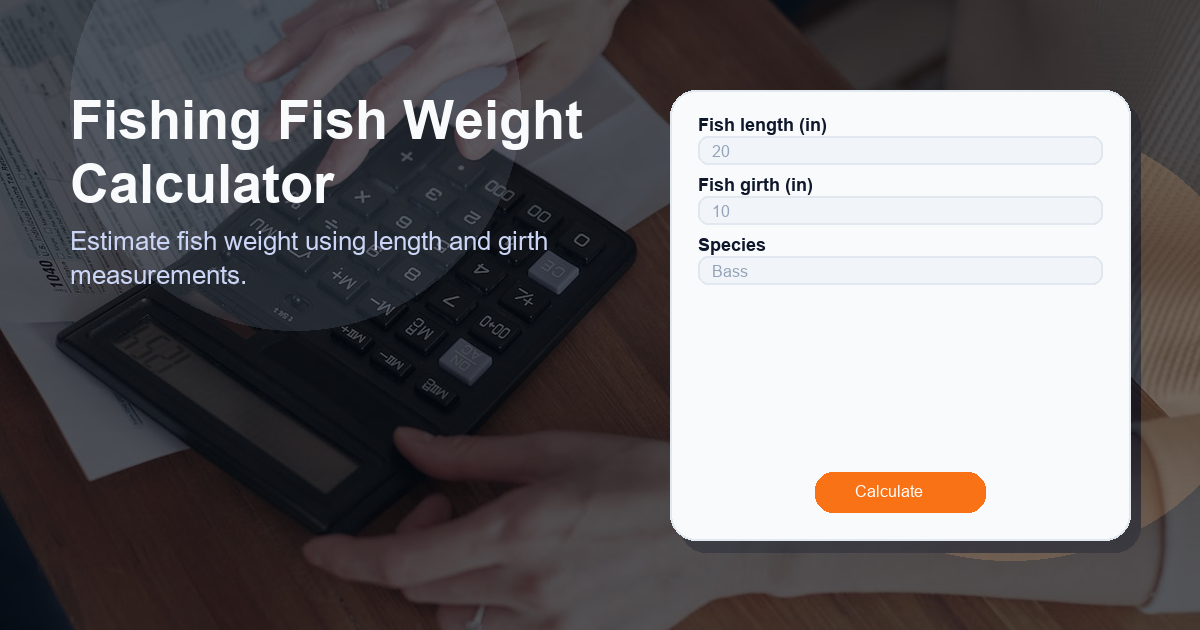
Using the Fishing Fish Weight Calculator is straightforward and user-friendly. Follow these simple steps:
- Measure the Fish: Use a measuring tape to accurately measure the length and girth of the fish. The length should be measured from the tip of the snout to the end of the tail, while the girth should be measured around the thickest part of the fish’s body.
- Select the Species: Different fish species have varying body shapes and densities. Choose the appropriate species from the dropdown menu to ensure the most accurate weight estimation.
- Input the Measurements: Enter the fish’s length (in inches) and girth (in inches) into the designated fields.
- Calculate: Click the “Calculate” button to receive the estimated weight of the fish based on the provided measurements.
With just a few clicks, anglers can gain valuable insights into their catch!
How the Fishing Fish Weight Calculator Formula Works
The formula used in the Fishing Fish Weight Calculator is designed to provide a reliable estimate of fish weight based on two primary measurements: length and girth. The formula is as follows:
length_in > 0 && girth_in > 0 ? (length_in * Math.pow(girth_in, 2) / 800) * species_factor : 0
Here’s a breakdown of the formula:
- Length Measurement: The length of the fish is multiplied by the square of the girth measurement. This relationship takes into account the overall size of the fish.
- Species Factor: Different species of fish have different body compositions. The species factor is a multiplier that adjusts the final weight estimate based on the specific characteristics of the fish type.
- Division by 800: This constant helps to normalize the weight estimation, ensuring that the output is in pounds.
By using this formula, the calculator provides an accurate weight estimate that can help anglers make informed decisions.
Use Cases for the Fishing Fish Weight Calculator
The Fishing Fish Weight Calculator is beneficial for various scenarios:
- Catch-and-Release Practices: Anglers can estimate the weight of their catch to determine whether to keep or release the fish based on size and weight regulations.
- Health Assessments: Estimating the weight of a fish can help assess its health and growth. A fish that is significantly underweight may indicate environmental issues.
- Competition Fishing: In fishing tournaments, knowing the weight of the catch can be crucial for scoring and prizes.
- Personal Records: Anglers can track their personal best catches by estimating the weight of each fish they catch.
Overall, this calculator serves as a valuable resource for both recreational and competitive anglers.
Other Factors to Consider When Calculating Fish Weight
- Fish Condition: A fish’s condition can affect its weight. A fish that is well-fed may weigh more than one that is malnourished, even if they are the same size.
- Water Temperature: Fish can lose weight due to stress or temperature changes in their environment, which can impact their overall health.
- Time of Year: Fish may gain or lose weight depending on the season. For example, many species spawn in the spring, leading to temporary weight fluctuations.
- Measurement Accuracy: Ensure that measurements are taken accurately, as even small errors can lead to significant differences in estimated weight.
By considering these factors, anglers can gain a better understanding of their catch and its health.
FAQs about the Fishing Fish Weight Calculator
1. How accurate is the Fishing Fish Weight Calculator?
The calculator provides a reliable estimate based on length, girth, and species. However, actual weight may vary due to factors like fish condition and measurement accuracy.
2. Can I use this calculator for any fish species?
While the calculator is designed for various species, it’s important to select the correct species from the dropdown menu for the most accurate estimate.
3. What if I don’t have girth measurements?
Girth is a crucial measurement for accurate weight estimation. If you cannot measure girth, the calculator may not provide a reliable estimate.
4. Is the Fishing Fish Weight Calculator free to use?
Yes, the Fishing Fish Weight Calculator is free and accessible to all anglers looking to estimate their catch’s weight.
5. Can I save my calculations?
The calculator does not currently offer a save feature, but you can manually record your results for future reference.