Contents
- Fishing Drag Setting Calculator
- What this Fishing Drag Setting Calculator Does
- How to Use the Fishing Drag Setting Calculator
- How the Fishing Drag Setting Calculator Formula Works
- Use Cases for the Fishing Drag Setting Calculator
- Other Factors to Consider When Calculating Drag Settings
- Frequently Asked Questions
Fishing Drag Setting Calculator
What this Fishing Drag Setting Calculator Does
The Fishing Drag Setting Calculator is an essential tool for anglers looking to optimize their fishing experience. This calculator allows you to estimate the ideal drag setting based on your line strength and the percentage of drag you wish to apply. Proper drag settings are crucial for successful fishing, as they help prevent line breakage and ensure that you can effectively reel in your catch. By using this calculator, you can tailor your setup for different fishing conditions and target species.
How to Use the Fishing Drag Setting Calculator
Using the Fishing Drag Setting Calculator is straightforward and user-friendly. Here’s how to get started:
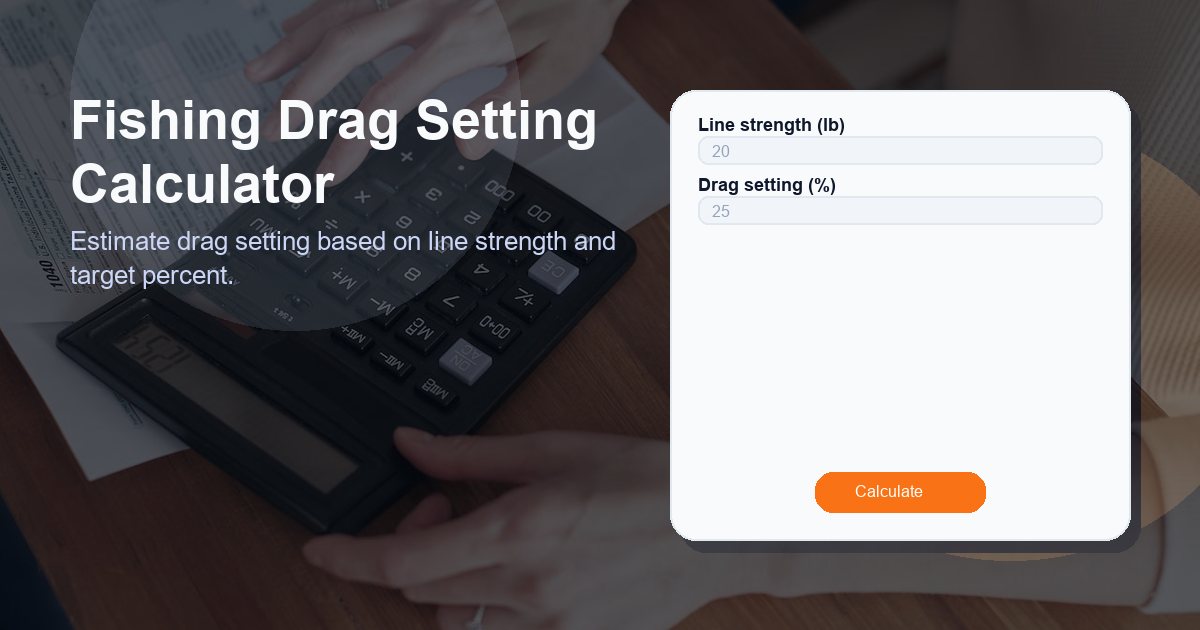
- Input Line Strength: Enter the strength of your fishing line in pounds (lb). This is the maximum weight your line can handle before breaking.
- Input Drag Setting: Enter the desired drag setting as a percentage (%). This percentage indicates how much resistance you want to apply when a fish pulls on the line.
- Calculate: Click the calculate button to get your drag setting result.
The formula used in this calculator is simple but effective: line_strength_lb * drag_percent / 100. This will give you the specific drag setting in pounds, allowing you to adjust your reel accordingly.
How the Fishing Drag Setting Calculator Formula Works
The formula behind the Fishing Drag Setting Calculator is designed to provide accurate results based on two critical inputs: line strength and drag percentage. Here’s a breakdown of how it works:
- Line Strength (lb): This is the maximum weight your fishing line can support. It varies based on the type of line you are using (monofilament, braided, etc.). Understanding this value is crucial for setting an appropriate drag.
- Drag Percentage (%): This represents the fraction of the line strength that you want to use as drag. A common practice is to set the drag at 20% to 30% of the line strength for most fishing scenarios.
By multiplying the line strength by the drag percentage and dividing by 100, you can effectively determine how much resistance your reel will apply when a fish pulls on the line. This calculation ensures that you have enough drag to tire the fish without risking line breakage.
Use Cases for the Fishing Drag Setting Calculator
The Fishing Drag Setting Calculator is versatile and can be applied in various fishing scenarios. Here are some common use cases:
- Freshwater Fishing: Whether you’re targeting bass, trout, or catfish, adjusting your drag setting can be crucial for success. A well-calibrated drag can help you land bigger fish without losing your line.
- Saltwater Fishing: In saltwater environments, fish tend to be larger and more aggressive. Setting your drag correctly can mean the difference between landing a trophy fish and losing it to a broken line.
- Trolling: When trolling for species like salmon or marlin, having the right drag setting allows you to maintain control over your bait and the fish’s movements.
- Catch and Release: If you’re practicing catch and release fishing, a properly set drag can help minimize stress on the fish, ensuring a better chance of survival after release.
Other Factors to Consider When Calculating Drag Settings
- Fish Species: Different species have varying fighting styles and strengths. Adjust your drag settings based on the type of fish you’re targeting.
- Line Type: Different types of fishing lines (monofilament, fluorocarbon, braided) have different stretch and strength characteristics. This can affect how you set your drag.
- Water Conditions: In turbulent or fast-moving water, you might need to adjust your drag settings to account for stronger currents.
- Fishing Technique: Techniques such as jigging or bottom fishing may require different drag settings compared to trolling or casting.
By taking these factors into account, you can ensure that your drag settings are not only calculated correctly but also adapted to the specific conditions you encounter on the water.
Frequently Asked Questions
What is the ideal drag setting for fishing?
The ideal drag setting typically ranges between 20% to 30% of your line strength, depending on the species you are targeting and the fishing conditions.
Can I use the calculator for different types of fishing lines?
Yes, the Fishing Drag Setting Calculator can be used for various types of fishing lines. Just ensure you input the correct line strength for the specific line type you are using.
How often should I check my drag settings?
It’s advisable to check your drag settings before each fishing trip and adjust them as necessary based on the conditions and species you plan to target.
Can I use this calculator for saltwater fishing?
Absolutely! The Fishing Drag Setting Calculator is suitable for both freshwater and saltwater fishing. Just make sure to input the correct line strength for your setup.
What happens if my drag is set too high?
If your drag is set too high, it can lead to line breakage, loss of fish, and damage to your fishing gear. Always ensure your drag is set within the recommended percentage range.