Contents
- Bow Fishing Line Strength Calculator
- What this Bow Fishing Line Strength Calculator Does
- How to Use the Bow Fishing Line Strength Calculator
- How the Bow Fishing Line Strength Calculator Formula Works
- Use Cases for the Bow Fishing Line Strength Calculator
- Other Factors to Consider When Calculating Line Strength
- FAQ
- 1. What is the ideal safety margin for bow fishing?
- 2. Can I use this calculator for all types of fishing?
- 3. How do I choose the right line type?
- 4. Is it better to overestimate or underestimate line strength?
- 5. How often should I check my line strength?
- More calculators like the Bow Fishing Line Strength Calculator
Bow Fishing Line Strength Calculator
What this Bow Fishing Line Strength Calculator Does
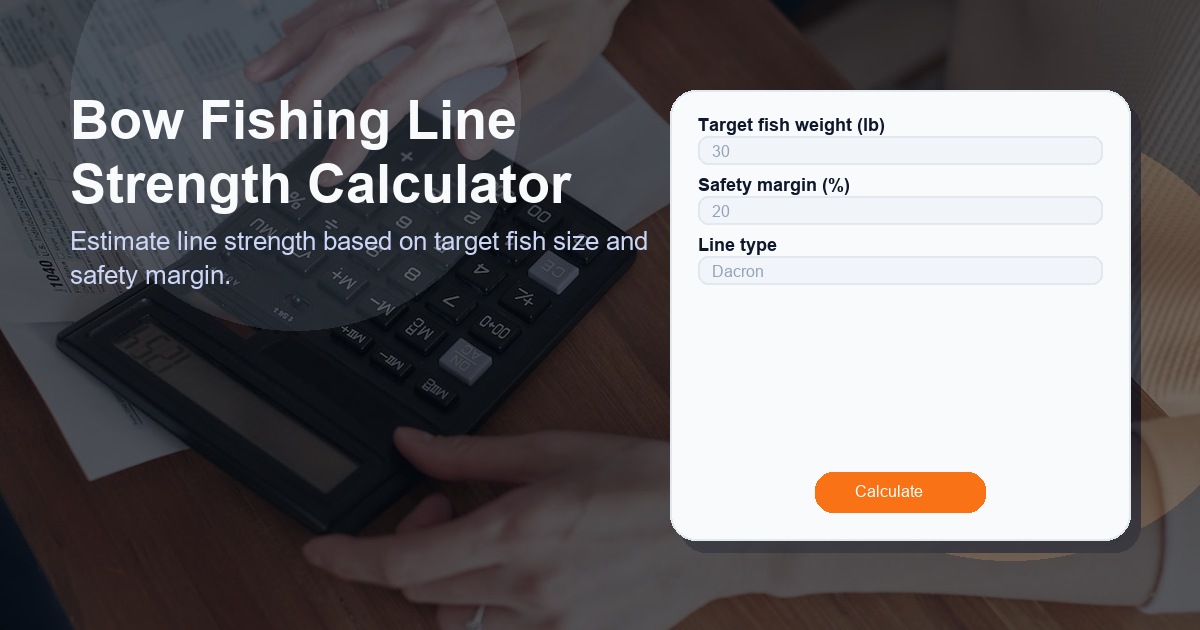
The Bow Fishing Line Strength Calculator is an essential tool for anglers looking to optimize their fishing experience. This calculator estimates the line strength needed based on two critical factors: the weight of the target fish and a safety margin. By inputting these variables, you can determine the appropriate line strength to ensure a successful catch while minimizing the risk of line breakage.
Understanding the line strength is crucial for bow fishing, as it directly impacts your ability to reel in larger fish. With the right line strength, you can enhance your chances of landing your desired catch without compromising safety or performance.
How to Use the Bow Fishing Line Strength Calculator
Using the Bow Fishing Line Strength Calculator is straightforward and user-friendly. Follow these simple steps to get your recommended line strength:
- Input Target Fish Weight: Enter the weight of the fish you are targeting in pounds (lb).
- Set Safety Margin: Choose a safety margin percentage that reflects your comfort level. This is typically between 10% to 30%.
- Select Line Type: Choose the type of line you are using, as different materials have varying strength characteristics.
- Calculate: Click the calculate button to receive your Recommended Line Strength.
By following these steps, you will have a clear understanding of the line strength required for your fishing expedition, tailored to your specific needs.
How the Bow Fishing Line Strength Calculator Formula Works
The formula used in the Bow Fishing Line Strength Calculator is designed to provide an accurate recommendation based on your inputs. Here’s how it works:
Recommended Line Strength = fish_weight_lb * (1 + safety_margin / 100) * line_type
In this formula:
- fish_weight_lb: The weight of your target fish in pounds.
- safety_margin: A percentage that adds extra strength to account for unexpected pulls or movements.
- line_type: A multiplier based on the type of line you are using, which reflects its inherent strength.
By multiplying the fish weight by the safety margin and line type, the calculator provides a recommended line strength that ensures you are well-equipped to handle your catch.
Use Cases for the Bow Fishing Line Strength Calculator
The Bow Fishing Line Strength Calculator is beneficial in various scenarios:
- Targeting Different Fish Species: Anglers can adapt their line strength based on the species they are pursuing, whether it’s a small catfish or a larger carp.
- Adjusting for Conditions: Different water conditions may require varying line strengths. For instance, fishing in heavy cover may necessitate stronger line.
- Safety Precautions: Ensuring that your line can handle more than the weight of the fish can prevent accidents and equipment failures.
- Optimizing Gear: Helps in selecting the right gear for bow fishing, ensuring that your setup is balanced and effective.
By utilizing this calculator, you can make informed decisions that enhance your fishing experience.
Other Factors to Consider When Calculating Line Strength
While the Bow Fishing Line Strength Calculator provides a solid foundation for determining line strength, several other factors should also be considered:
- Line Diameter: Thicker lines generally have higher breaking strength but may be less sensitive.
- Line Material: Different materials (e.g., monofilament, braided, fluorocarbon) have unique properties that affect strength and performance.
- Environmental Conditions: Water temperature, clarity, and structure can influence how fish behave and the effectiveness of your line.
- Fishing Technique: The method you use for bow fishing may require different line strengths; for example, a fast retrieve might need a stronger line to prevent breakage.
Taking these factors into account will help you make the best choices for your fishing gear and improve your overall success rate.
FAQ
1. What is the ideal safety margin for bow fishing?
The ideal safety margin typically ranges from 10% to 30%, depending on your comfort level and the type of fish you are targeting.
2. Can I use this calculator for all types of fishing?
This calculator is specifically designed for bow fishing; however, the principles can be adapted for other types of fishing with some modifications.
3. How do I choose the right line type?
Select a line type based on your fishing conditions and target species. Braided lines are often preferred for their strength and sensitivity, while monofilament is easier to handle.
4. Is it better to overestimate or underestimate line strength?
It’s generally better to overestimate line strength to ensure you can handle unexpected catches without risking breakage.
5. How often should I check my line strength?
Regularly inspect your line for wear and tear, especially before and after fishing trips, to ensure it meets the necessary strength requirements.