Contents
Bow Axle to Axle Calculator
What this Bow Axle to Axle Calculator does
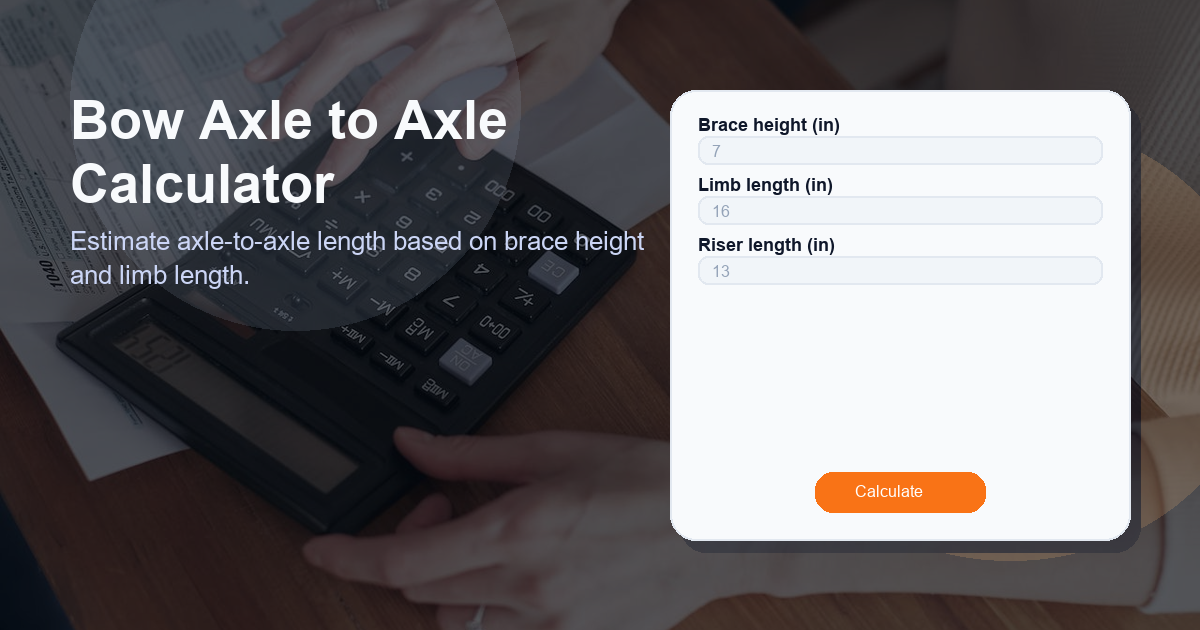
The Bow Axle to Axle Calculator is a valuable tool for archers and bow enthusiasts looking to determine the axle-to-axle length of their bows. This measurement is crucial for understanding the overall performance and handling characteristics of a bow. By inputting specific parameters such as brace height, limb length, and riser length, users can easily estimate the axle-to-axle length, which plays a significant role in accuracy, stability, and comfort during use.
How to use the Bow Axle to Axle Calculator
Using the Bow Axle to Axle Calculator is straightforward and user-friendly. Follow these simple steps:
- Input Brace Height: Enter the brace height of your bow in inches. This measurement is taken from the deepest part of the grip to the string when the bow is at rest.
- Input Limb Length: Enter the limb length of your bow in inches. This measurement is taken from the end of the limb to the pivot point where the limb meets the riser.
- Input Riser Length: Enter the riser length of your bow in inches. This is the vertical part of the bow that connects the grip to the limbs.
- Calculate: Click the calculate button to get the estimated axle-to-axle length.
Once you have entered these values, the calculator will use the following formula to provide you with the estimated axle-to-axle length:
Axle-to-Axle Length = Riser Length + (Limb Length * 2) – Brace Height
How the Bow Axle to Axle Calculator formula works
The formula used in the Bow Axle to Axle Calculator is designed to provide a precise estimation of the axle-to-axle length based on the three key components of a bow:
- Riser Length: This is the foundation of the bow’s structure. A longer riser generally contributes to better stability and accuracy.
- Limb Length: The limbs of the bow play a critical role in how the bow performs. Longer limbs can lead to a smoother draw cycle and increased energy transfer.
- Brace Height: The brace height affects the bow’s speed and forgiveness. A higher brace height often results in a more forgiving shot.
By combining these three measurements, the calculator provides an accurate estimate of the axle-to-axle length, which is essential for archers to choose the right bow for their needs.
Use cases for the Bow Axle to Axle Calculator
The Bow Axle to Axle Calculator can be beneficial in various scenarios:
- Choosing a Bow: When selecting a new bow, knowing the axle-to-axle length can help you determine whether it suits your shooting style and preferences.
- Customizing Your Setup: If you’re customizing your bow setup, this calculator can assist in ensuring that the axle-to-axle length aligns with your desired specifications.
- Comparing Different Bows: When comparing different bows, the axle-to-axle length is a critical factor that influences handling and performance.
- Understanding Bow Dynamics: For those interested in the technical aspects of archery, this calculator can help in understanding how different measurements affect bow dynamics.
Other factors to consider when calculating axle-to-axle length
While the Bow Axle to Axle Calculator provides a valuable estimate, there are additional factors to consider:
- Bow Type: Different types of bows (compound, recurve, etc.) may have different handling characteristics, affecting how axle-to-axle length impacts performance.
- Shooting Style: Your shooting style can influence the ideal axle-to-axle length. For example, hunters may prefer shorter bows for maneuverability, while target archers may opt for longer bows for stability.
- Personal Preference: Ultimately, personal comfort and preference play a significant role in determining the best axle-to-axle length for you.
- Bow Weight: Heavier bows may require a different axle-to-axle length to maintain balance and control.
Frequently Asked Questions
What is axle-to-axle length in archery?
Axle-to-axle length refers to the distance between the axles of a bow, which significantly impacts its stability, accuracy, and handling characteristics.
Why is brace height important?
Brace height affects the bow’s speed and forgiveness. A higher brace height generally leads to a more forgiving shot but may sacrifice some speed.
Can I use this calculator for any type of bow?
While primarily designed for compound bows, the calculator can provide estimates for other types of bows as well, but results may vary based on bow design.
How does limb length affect bow performance?
Longer limbs can lead to a smoother draw cycle and better energy transfer, which can enhance overall bow performance.
What should I consider when choosing a bow based on axle-to-axle length?
Consider your shooting style, the type of bow, and personal preferences, as these factors will influence the ideal axle-to-axle length for your needs.