Cold temperatures can reduce battery capacity, slow charging, and expose weaknesses in an otherwise dependable power system. The best deep cycle batteries for winter use are selected for their chemistry, cold-weather charging limits, usable capacity, and application-specific durability.
Below, you’ll find lithium, AGM, and traditional lead-acid options for RVs, marine equipment, solar storage, and backup power. Use the guide after the product comparisons to match battery type and size to your winter setup.
Contents
- Best 10 Deep Cycle Batteries for Winter Use Picks for 2026
- Top Winter-Ready Pick – 12V 300Ah Self-Heating LiFePO4 Battery
- High-Capacity Lead-Acid Set – US Battery US2200 XC2 4-Pack
- Sealed AGM Utility Pick – Interstate 12V 110Ah AGM Battery
- Lightweight Lithium Value – 12V 100Ah LiFePO4 Group 31 Battery
- Reliable AGM Value – Renogy 12V 100Ah AGM Battery
- Rugged Commercial AGM – Trojan T1275-AES 12V 130Ah Battery
- Cold-Weather Lithium Control – SUPER EMPOWER 12V 100Ah LiFePO4
- Best Dual-Purpose AGM – Mighty Max MM-G24M
- Best Long-Life Lithium – 12V 100Ah LiFePO4 Group 31
- Best Compact Marine AGM – Newport 12V 50Ah
- How We Picked the Best Deep Cycle Batteries for Winter Use
- Quick Comparison
- Key Buying Factors for Deep Cycle Batteries for Winter Use
- Who Should Buy Which Deep Cycle Batteries for Winter Use?
Best 10 Deep Cycle Batteries for Winter Use Picks for 2026
Top Winter-Ready Pick
12V 300Ah Self-Heating LiFePO4 Battery

- Self-heating below 32°F while charging
- 200A BMS and app monitoring
- 300Ah capacity for RV and off-grid power
Best For: Cold-weather RV, marine, solar, and backup-power systems
High-Capacity Lead-Acid Set

- Four 6V GC2 flooded batteries
- 232Ah capacity per battery
- Two-year manufacturer warranty
Best For: Golf-cart owners needing a complete GC2 replacement set
Sealed AGM Utility Pick
Interstate 12V 110Ah AGM Battery

- Maintenance-free sealed AGM design
- 110Ah capacity for 12V applications
- Suitable for mobility, solar, RV, and wind systems
Best For: Spill-resistant 12V mobility and utility applications
Lightweight Lithium Value
12V 100Ah LiFePO4 Group 31 Battery
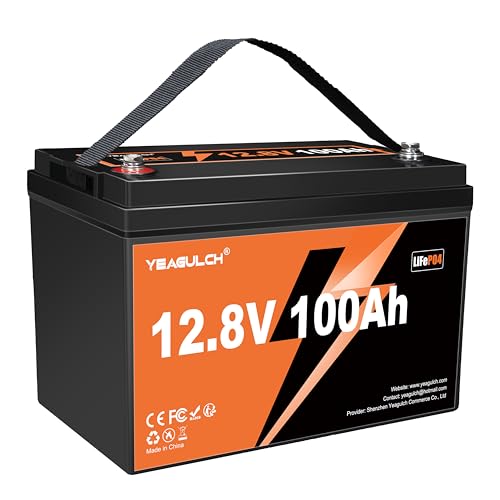
- About 21.6 pounds with 95% usable capacity
- Low-temperature protection listed
- Up to 4,000 cycles at 100% depth of discharge
Best For: Portable RV, camping, solar, and backup-power systems
Reliable AGM Value

- Discharge-rated from -4°F to 140°F
- Sealed, maintenance-free AGM design
- Supports appliances and expandable battery setups
Best For: RVs, cabins, and solar backup systems needing durable AGM power
Rugged Commercial AGM
Trojan T1275-AES 12V 130Ah Battery

- 130Ah sealed AGM deep-cycle capacity
- Maintenance-free and vibration-resistant
- Sold as a two-battery pack
Best For: Commercial, marine, renewable-energy, and utility systems
Cold-Weather Lithium Control
SUPER EMPOWER 12V 100Ah LiFePO4

- BMS controls charging and discharge in cold conditions
- Lightweight 21.6-pound Group 24 replacement
- Supports 4S4P expansion and includes a five-year warranty
Best For: RV, marine, and off-grid systems operating in freezing conditions
Best Dual-Purpose AGM
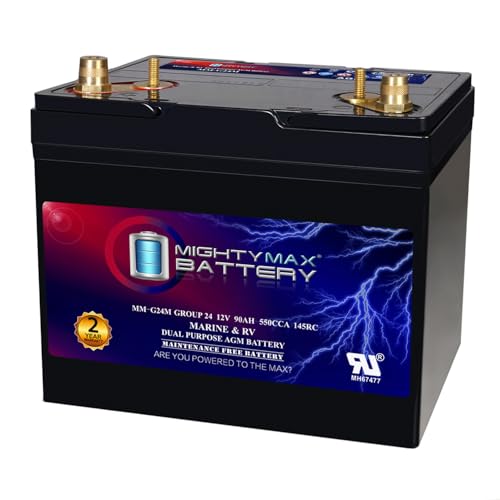
- 90Ah deep-cycle capacity
- 550 CCA and 700 MCA starting power
- Sealed, spill-proof AGM construction
Best For: Boaters wanting starting power and accessory runtime from one battery
Best Long-Life Lithium

- Automatic charging cut-off below 32°F
- 24-pound Group 31 replacement
- Up to 15,000 cycles at 60% DOD
Best For: RV, marine, and off-grid systems needing lightweight, high-cycle power
Best Compact Marine AGM

- Steady 50Ah trolling-motor power
- Sealed, low-maintenance AGM design
- Compact fit for kayaks and small boats
Best For: Small-watercraft owners needing portable 12V marine power
Top Winter-Ready Pick – 12V 300Ah Self-Heating LiFePO4 Battery
For deep cycle batteries for winter use, this 12V 300Ah LiFePO4 model stands out because its heating system can activate below 32°F while charging, provided the charging current exceeds 10A. It also adds app monitoring and a 200A BMS for larger RV, marine, solar, and backup-power setups.
Best For: RVs, boats, off-grid solar systems, and home backup applications needing high capacity and cold-weather charging support.
Pros:
- Self-heating activates below 32°F during qualifying charging conditions.
- App displays capacity, voltage, current, temperature, and fault alerts.
- 300Ah capacity supports extended use of appliances and electronics.
- Offers overcharge, over-discharge, overcurrent, short-circuit, and temperature protection.
Cons:
- Heating requires a charger connection and charging current above 10A.
- At 54.7 pounds, it is substantially heavier than smaller lithium batteries.
- Not suitable for golf-cart use when connected in series.
This is a strong winter-oriented choice when cold-weather charging and substantial runtime matter more than compact size. Confirm charger compatibility and installation requirements before purchase.
High-Capacity Lead-Acid Set – US Battery US2200 XC2 4-Pack
This four-battery set is a conventional option among deep cycle batteries for winter use, using 6V flooded lead-acid batteries in a GC2 configuration. It provides 232Ah per battery and is designed primarily for golf-cart applications.
Best For: Golf-cart owners replacing a four-battery GC2 setup with a traditional 6V lead-acid configuration.
Pros:
- Four batteries are included in the pack.
- Each unit provides 232Ah at 6V.
- GC2 sizing makes it a replacement option for comparable golf-cart batteries.
- Includes a two-year manufacturer warranty.
Cons:
- Flooded lead-acid chemistry is less convenient than sealed or lithium designs.
- The complete set is heavy, with each battery weighing 62 pounds.
- The supplied information does not identify a dedicated low-temperature charging feature.
This set makes sense when your priority is a like-for-like GC2 golf-cart replacement and you are comfortable with lead-acid battery maintenance. It is less specialized for cold-weather charging than a battery with built-in heating or low-temperature controls.
Sealed AGM Utility Pick – Interstate 12V 110Ah AGM Battery
This sealed AGM battery is a practical candidate among deep cycle batteries for winter use when spill resistance and low maintenance are priorities. Its 12V, 110Ah design is intended for mobility equipment, solar, wind, RV, and other rechargeable applications.
Best For: Wheelchairs, scooters, medical equipment, small solar systems, and other 12V applications that need a maintenance-free sealed battery.
Pros:
- AGM and VRLA construction is sealed, spill-proof, and maintenance-free.
- Designed for repeated deep-discharge use.
- Works across mobility, solar, wind-energy, RV, and equipment applications.
- Includes insert terminals with terminal hardware when applicable.
Cons:
- The product is not a replacement for a golf-cart battery.
- At 71.5 pounds, it is heavy for a 12V 110Ah battery.
- The supplied information does not list a dedicated low-temperature charging feature.
Choose this model for a sealed, straightforward 12V solution rather than maximum capacity or specialized winter heating. Verify the dimensions, terminal style, and equipment requirements before ordering.
Lightweight Lithium Value – 12V 100Ah LiFePO4 Group 31 Battery
For shoppers comparing deep cycle batteries for winter use, this 12V 100Ah LiFePO4 battery offers low weight, high usable capacity, and stated low-temperature protection. It is suited to RV, marine, camping, solar, UPS, and off-grid systems, though it should not be used as a starting or car battery.
Best For: Portable RV, camping, marine, solar, and backup-power systems where lower weight and efficient energy use are important.
Pros:
- Weighs about 21.6 pounds, making installation and transport easier.
- Provides up to 95% capacity utilization compared with about 50% for lead-acid batteries.
- Rated for up to 4,000 cycles at 100% depth of discharge.
- Supports up to four batteries in series or parallel configurations.
Cons:
- Not recommended for trolling motors above 700W.
- It is not a car battery, starting battery, or golf-cart battery.
- The supplied information does not describe an automatic self-heating system.
This is a sensible lightweight alternative for cold-weather-capable installations when you need efficiency and portability. Confirm that your charger and system provide the appropriate low-temperature safeguards before use.
Reliable AGM Value – Renogy 12V 100Ah AGM Battery
For shoppers comparing deep cycle batteries for winter use, the Renogy 12V 100Ah AGM battery stands out for sealed, maintenance-free construction and stated discharge performance from -4°F to 140°F. Its lead-acid AGM design is a practical fit for RVs, cabins, and backup power setups.
Best For: RVs, cabins, solar systems, and users who want a low-maintenance AGM battery for cold-weather operation.
Pros:
- Rated for discharge performance from -4°F to 140°F.
- Sealed AGM construction reduces troubleshooting and maintenance.
- Supports parallel connections up to 4P and series connections without a stated limit.
- 1100A maximum discharge current for five seconds can support many household appliances.
Cons:
- At 63.9 pounds, it is considerably heavier than the listed lithium option.
- AGM batteries generally offer less usable weight efficiency than LiFePO4 designs.
- Charging and operation details are less cold-specific than the lithium battery’s built-in temperature controls.
The Renogy is a straightforward choice when safety, sealed construction, and broad temperature discharge performance matter more than minimizing weight. Its two-year prorated warranty and low stated self-discharge rate add practical appeal for seasonal systems.
Rugged Commercial AGM – Trojan T1275-AES 12V 130Ah Battery
The Trojan T1275-AES is worth considering among deep cycle batteries for winter use when you need sealed AGM construction for demanding cycling. Sold as a two-battery pack, it is designed for renewable energy, marine, mobility, utility, and commercial applications.
Best For: Renewable-energy banks, marine house systems, utility vehicles, floor scrubbers, and other demanding installations.
Pros:
- 130Ah capacity per 12V battery provides substantial storage.
- Sealed AGM design eliminates watering and acid maintenance.
- Vibration-resistant construction is suited to shock and daily cycling.
- Thick internal plates are designed for strong discharge performance and long cycle life.
Cons:
- The supplied notes do not specify a minimum operating or charging temperature.
- AGM construction is heavier and less energy-dense than lithium alternatives.
- A two-battery pack may be more capacity than smaller systems require.
Trojan’s main advantage is its rugged, maintenance-free format for systems that cycle frequently or face vibration. However, buyers specifically preparing for freezing conditions should verify the installation’s temperature requirements because the supplied specifications do not provide a cold-weather rating.
Cold-Weather Lithium Control – SUPER EMPOWER 12V 100Ah LiFePO4
For deep cycle batteries for winter use, this SUPER EMPOWER LiFePO4 battery offers the clearest cold-weather controls of the group. Its BMS pauses charging below 32°F and stops discharge at -4°F, helping protect the battery while supporting RV, marine, solar, and off-grid energy storage.
Best For: RVs, boats, trolling-motor systems, and off-grid setups where low weight and automatic cold-temperature protection are priorities.
Pros:
- Built-in BMS pauses charging below 32°F and stops discharge at -4°F.
- At 21.6 pounds, it is much lighter than the listed AGM battery.
- Group 24 dimensions and M8 terminals provide a stated drop-in replacement format.
- Supports up to 4S4P expansion and includes a five-year warranty.
Cons:
- Charging requires a lithium-compatible charger or properly configured solar controller.
- It is designed for energy storage and is not suitable for engine starting or cranking.
- Charging is disabled below freezing, so the system may need warming before recharging.
This battery is the most winter-focused option in the lineup because its BMS directly manages low-temperature charging and discharge. Its lighter weight and five-year warranty are useful advantages, provided your system uses compatible lithium charging equipment.
Best Dual-Purpose AGM – Mighty Max MM-G24M
For boaters who need deep cycle batteries for winter use as well as dependable engine starting, the Mighty Max MM-G24M combines a 90Ah deep-cycle design with 550 CCA and 700 MCA. Its sealed AGM construction is maintenance-free and spill-proof, making it a practical choice for marine and off-grid equipment.
Best For: Boat owners needing one battery for engine starting and extended accessory power.
Pros:
- 90Ah capacity supports extended deep-discharge use.
- 550 CCA and 700 MCA provide strong starting performance.
- Sealed AGM design is maintenance-free, spill-proof, and vibration-resistant.
- Rugged ABS casing and two-year limited warranty add practical durability.
Cons:
- At roughly 52 pounds, it is substantially heavier than the lithium option.
- The supplied information lists both a one-year manufacturer warranty and a two-year limited warranty, so coverage should be confirmed before purchase.
This is a sensible all-around marine battery when starting power matters as much as sustained accessory runtime. Its AGM construction suits demanding conditions, but its lead-acid weight may be a drawback for portable setups.
Best Long-Life Lithium – 12V 100Ah LiFePO4 Group 31
This 12V 100Ah LiFePO4 battery stands out among deep cycle batteries for winter use because its built-in Smart BMS includes automatic charging cut-off below 32°F. It also offers a 15,000-cycle claim at 60% depth of discharge, low weight, and Group 31 dimensions for RV, marine, solar, and backup applications.
Best For: RV, marine, and off-grid users who want lightweight power with cold-weather charging protection.
Pros:
- Low-temperature cut-off helps prevent charging damage below 32°F.
- 24-pound design is considerably lighter than comparable lead-acid batteries.
- LiFePO4 cells offer up to 15,000 cycles at 60% depth of discharge.
- 100A Smart BMS protects against overcharge, over-discharge, over-current, and short circuits.
Cons:
- The low-temperature feature prevents charging below freezing rather than enabling charging in those conditions.
- Its lithium chemistry requires compatible charging equipment and system settings.
- It is designed for discharge down to -4°F, but the supplied notes do not specify a cold-weather charging temperature above the cutoff.
With its combination of light weight, long cycle life, and built-in cold-charge protection, this is the strongest fit for frequent cycling and mobile installations. Verify charger compatibility and winter charging conditions before installation.
Best Compact Marine AGM – Newport 12V 50Ah
The Newport 12V 50Ah AGM is a compact option for shoppers comparing deep cycle batteries for winter use in small boats and trolling-motor setups. Its sealed lead-acid construction provides steady 12V power, while the manageable 32-pound weight makes transport from a vehicle to the dock easier.
Best For: Kayaks, jon boats, inflatable boats, and small watercraft using 12V trolling motors.
Pros:
- 50Ah capacity is designed for steady trolling-motor and marine-electronics power.
- Sealed AGM construction requires minimal maintenance.
- Compact, portable format suits small boats and shoreline transport.
- One-year limited warranty and USA-based customer support are included benefits.
Cons:
- Its 50Ah capacity is lower than the 90Ah and 100Ah alternatives.
- The supplied notes do not provide a CCA or MCA starting rating.
- At 32 pounds, it is portable but heavier than the lithium battery.
This battery is best viewed as a straightforward, compact power source for 12V trolling motors rather than a high-capacity winter backup. It fits smaller watercraft well, but larger loads or longer runtimes may call for a higher-capacity model.
How We Picked the Best Deep Cycle Batteries for Winter Use
We focused on battery chemistry, rated capacity, cold-weather behavior, charging requirements, durability, and intended use. The selection includes LiFePO4 batteries with smart battery-management systems, sealed AGM models, and flooded lead-acid batteries for buyers who prioritize different combinations of weight, cost, maintenance, and cold-weather performance.
We also considered practical specifications such as group size, amp-hour rating, terminal style, cycle life, starting capability, and compatibility with RV, marine, solar, and off-grid systems. A larger capacity rating does not automatically mean more usable energy, so chemistry and operating conditions matter.
Quick Comparison
| Battery type | Typical advantages | Winter considerations |
|---|---|---|
| LiFePO4 | Low weight, long cycle life, high usable capacity | Must not be charged below the manufacturer’s low-temperature limit unless heating or protection is provided |
| AGM | Sealed, maintenance-free, reliable, and generally easier to use in cold conditions | Heavier and offers less usable capacity than lithium |
| Flooded lead-acid | Established technology, strong value, and broad availability | Requires ventilation and maintenance; freezing risk increases when discharged |
Key Buying Factors for Deep Cycle Batteries for Winter Use
Cold-Temperature Charging
This is one of the most important differences between battery types. Many LiFePO4 batteries can discharge in cold weather but should not be charged below a specified temperature. Look for a built-in low-temperature cutoff or self-heating feature if winter charging is unavoidable. AGM and flooded batteries also lose capacity in the cold, but their charging procedures differ, so follow the manufacturer’s limits.
Usable Capacity and Voltage
Compare amp-hours alongside voltage and expected loads. Lithium batteries commonly provide more usable energy before voltage drops, while lead-acid batteries are often best limited to roughly half their rated capacity for longer service life. Confirm that the battery bank matches your inverter, charger, solar controller, and wiring.
Size, Weight, and Installation
Group numbers such as 24, 31, and GC2 help indicate physical fit, but dimensions and terminal placement still vary. Measure the battery compartment, check hold-down requirements, and verify whether your charger supports the selected chemistry. Lithium models can reduce weight, while AGM and flooded batteries may require stronger mounting.
Maintenance and Safety
Sealed AGM batteries are convenient for enclosed or mobile installations, whereas flooded batteries need ventilation, inspection, and water maintenance. For lithium, confirm that the battery-management system protects against overcharge, over-discharge, excessive current, and low-temperature charging.
Who Should Buy Which Deep Cycle Batteries for Winter Use?
- Choose LiFePO4 for frequent cycling, lower weight, high usable capacity, and long service life. A self-heating model is the better choice for exposed winter installations or charging in freezing conditions.
- Choose AGM for a sealed, low-maintenance battery that can serve RV, solar, marine, or backup applications without lithium-specific charging equipment.
- Choose flooded lead-acid when upfront cost and established performance matter most, and you have suitable ventilation and time for routine maintenance.
- Choose a larger bank or higher-capacity model for off-grid winter use, high inverter loads, or periods with limited solar input. Keep batteries fully charged when stored to reduce cold-weather damage.