Contents
- Fishing Line Weight Calculator
- What this Fishing Line Weight Calculator Does
- How to Use the Fishing Line Weight Calculator
- How the Fishing Line Weight Calculator Formula Works
- Use Cases for the Fishing Line Weight Calculator
- Other Factors to Consider When Calculating Line Weight
- FAQ
- 1. How accurate is the Fishing Line Weight Calculator?
- 2. Can I use this calculator for all types of fishing lines?
- 3. What if I don’t know the material factor?
- 4. Is the line weight important for all fishing techniques?
- 5. Can I save my calculations for future use?
- More calculators like the Fishing Line Weight Calculator
Fishing Line Weight Calculator
What this Fishing Line Weight Calculator Does
The Fishing Line Weight Calculator is a valuable tool for anglers looking to optimize their fishing experience. This calculator helps you estimate the line weight based on two crucial parameters: the length of the fishing line and its diameter. By inputting these values along with the type of material used, you can effectively determine the appropriate line weight needed for various fishing conditions.
Understanding line weight is essential for successful fishing. It influences the casting distance, the type of bait you can use, and the overall performance of your fishing setup. Whether you’re a seasoned angler or a beginner, this calculator simplifies the process of selecting the right line weight, ensuring you are well-prepared for your next fishing adventure.
How to Use the Fishing Line Weight Calculator
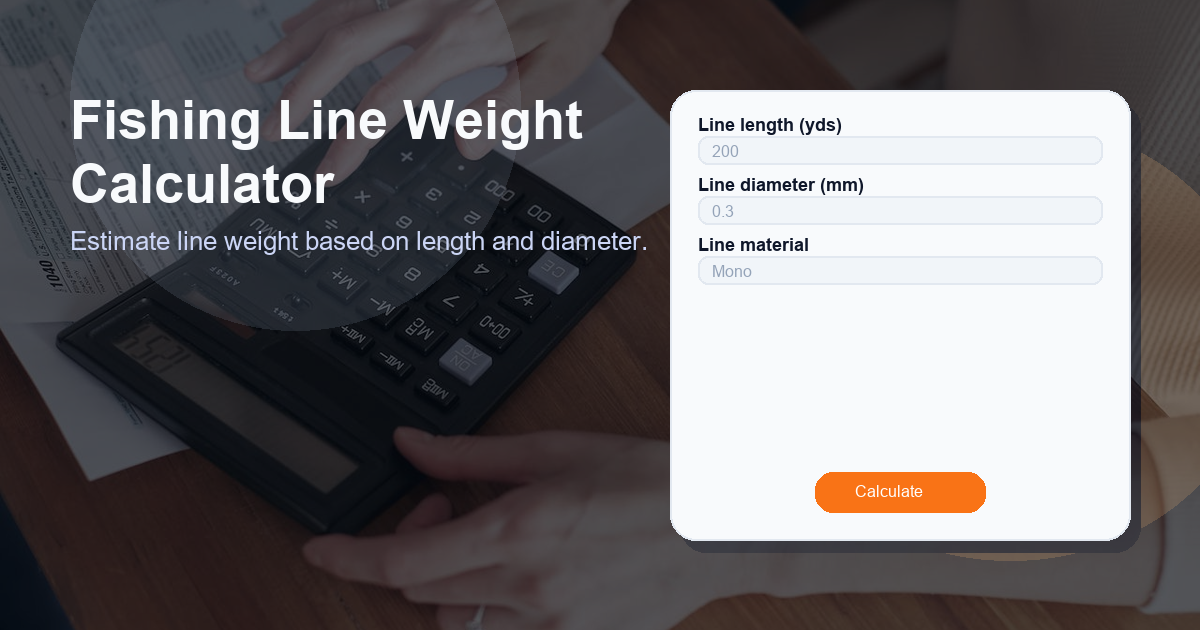
Using the Fishing Line Weight Calculator is straightforward and user-friendly. Follow these simple steps:
- Input the Line Length: Enter the length of your fishing line in yards (yds). This measurement is crucial as it directly impacts the total weight.
- Input the Line Diameter: Specify the diameter of the fishing line in millimeters (mm). The diameter affects the line’s buoyancy and strength.
- Select the Line Material: Choose the type of material your fishing line is made from. Different materials have unique properties that influence the final weight.
- Calculate: After entering all necessary information, click the calculate button. The calculator will use the formula to provide you with the estimated line weight.
Once you have the result, you can use this information to make informed decisions about your fishing gear and techniques.
How the Fishing Line Weight Calculator Formula Works
The Fishing Line Weight Calculator employs a straightforward formula to estimate line weight:
Line Weight = Line Length (yds) * Line Diameter (mm) * Material Factor
In this formula:
- Line Length: The distance of the line measured in yards. Longer lines typically weigh more.
- Line Diameter: The thickness of the line in millimeters. Thicker lines generally have a higher weight.
- Material Factor: This is a multiplier that varies based on the type of material used (e.g., monofilament, fluorocarbon, braided). Each material has distinct properties that affect its weight.
By combining these three elements, the calculator provides an accurate estimate of the line weight, allowing you to choose the best line for your fishing needs.
Use Cases for the Fishing Line Weight Calculator
The Fishing Line Weight Calculator serves various purposes, making it an essential tool for anglers:
- Choosing the Right Gear: By knowing the ideal line weight, you can select the appropriate rod, reel, and bait for your fishing expedition.
- Optimizing Casting Distance: A correctly weighted line can improve your casting distance, allowing you to reach deeper waters or specific fishing spots.
- Adapting to Conditions: Different fishing environments require different line weights. The calculator helps you adapt your setup based on conditions like water type and target species.
- Enhancing Fishing Techniques: Understanding the weight of your line can improve your overall fishing techniques, leading to a more successful outing.
Whether you’re fishing in freshwater or saltwater, the Fishing Line Weight Calculator can guide you in making the best choices for your fishing needs.
Other Factors to Consider When Calculating Line Weight
- Target Species: Different fish species have varying strength and resistance. Make sure to adjust your line weight based on the type of fish you are targeting.
- Water Conditions: The clarity and movement of the water can impact your line choice. In fast-moving waters, a heavier line may be necessary.
- Weather Conditions: Wind and rain can affect casting and line performance. A heavier line may be beneficial in windy conditions.
- Personal Preference: Some anglers prefer a specific type of line based on their experience and comfort level. Always consider your own fishing style.
By taking these factors into account, you can further refine your line weight selection, enhancing your overall fishing experience.
FAQ
1. How accurate is the Fishing Line Weight Calculator?
The Fishing Line Weight Calculator provides a reliable estimate based on the inputs you provide. However, actual performance may vary based on fishing conditions and personal preferences.
2. Can I use this calculator for all types of fishing lines?
Yes, the calculator is designed to work with various types of fishing lines, including monofilament, fluorocarbon, and braided lines. Just ensure you select the appropriate material factor.
3. What if I don’t know the material factor?
If you’re unsure about the material factor, you can often find this information on the fishing line packaging or consult with a fishing expert for guidance.
4. Is the line weight important for all fishing techniques?
Yes, line weight is crucial for all fishing techniques, as it affects casting distance, bait presentation, and the ability to catch specific fish species.
5. Can I save my calculations for future use?
While the calculator itself may not save calculations, you can jot down your inputs and results for future reference or use a fishing log to track your preferences.