Contents
- Fishing Line Strength Calculator
- What this Fishing Line Strength Calculator Does
- How to Use the Fishing Line Strength Calculator
- How the Fishing Line Strength Calculator Formula Works
- Use Cases for the Fishing Line Strength Calculator
- Other Factors to Consider When Calculating Line Strength
- Frequently Asked Questions
- What is the best line strength for bass fishing?
- How do I determine the technique factor for my fishing style?
- Can I use the calculator for saltwater fishing?
- Is a higher safety margin always better?
- How often should I check my line strength?
- More calculators like the Fishing Line Strength Calculator
Fishing Line Strength Calculator
What this Fishing Line Strength Calculator Does
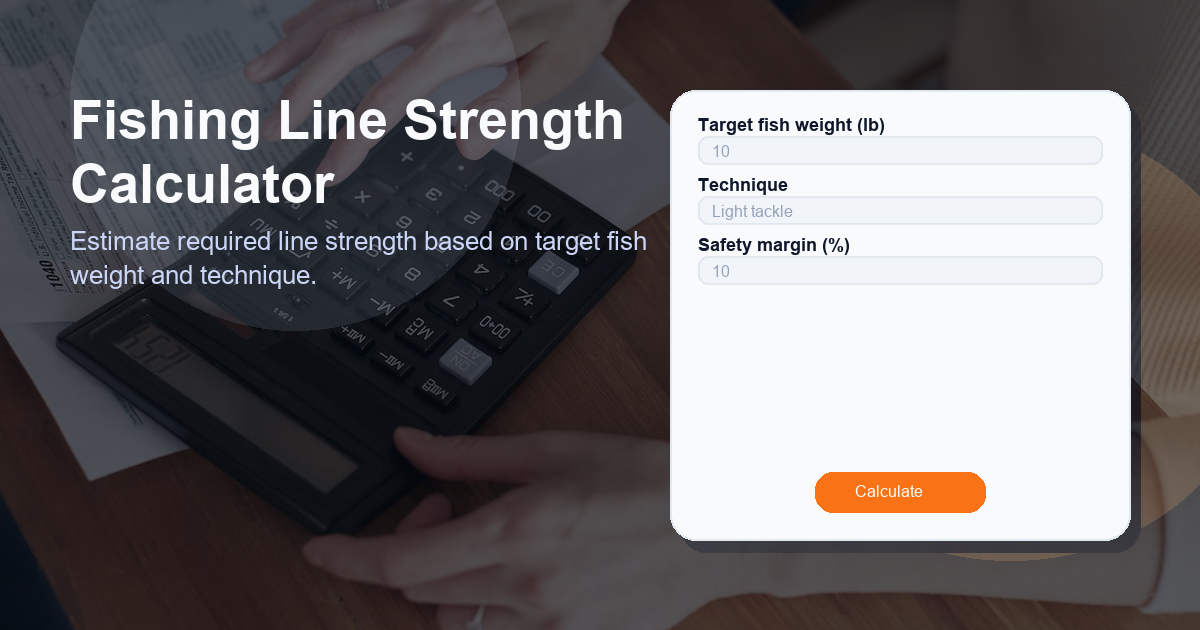
The Fishing Line Strength Calculator is an essential tool for anglers looking to optimize their fishing experience. This calculator helps you estimate the required line strength based on the target fish weight and the fishing technique you plan to use. By providing a precise calculation, it ensures that you select the right fishing line, enhancing your chances of a successful catch while minimizing the risk of line breakage.
How to Use the Fishing Line Strength Calculator
Using the Fishing Line Strength Calculator is straightforward and user-friendly. Here’s a step-by-step guide:
- Input Target Fish Weight: Enter the weight of the fish you aim to catch in pounds (lb). This is a crucial factor as it directly influences the strength required for your fishing line.
- Select Fishing Technique: Choose the technique you will be using, such as spinning, baitcasting, or trolling. Each technique has a different technique factor that will affect the line strength needed.
- Set Safety Margin: Input a safety margin percentage. This margin accounts for unexpected factors like strong currents or the fish’s fighting ability, ensuring your line can handle more than just the target weight.
- Calculate: Click the calculate button to get your Recommended Line Strength. This value is crucial for selecting the appropriate line for your fishing adventure.
How the Fishing Line Strength Calculator Formula Works
The formula used in the Fishing Line Strength Calculator is designed to provide an accurate estimate of the line strength required. The formula is as follows:
Recommended Line Strength = fish_weight_lb * technique_factor * (1 + safety_margin / 100)
Here’s a breakdown of the components:
- fish_weight_lb: The weight of the target fish in pounds.
- technique_factor: A multiplier that varies based on the fishing technique employed. For example, trolling may require a higher factor than fly fishing due to the different dynamics involved.
- safety_margin: An additional percentage that adds a buffer to the recommended line strength, ensuring that the line can withstand unexpected challenges.
This formula allows you to customize your line strength based on specific conditions and techniques, making it a versatile tool for any angler.
Use Cases for the Fishing Line Strength Calculator
The Fishing Line Strength Calculator can be beneficial in various scenarios:
- Targeting Large Game Fish: If you’re planning to fish for larger species like marlin or tuna, knowing the required line strength is crucial to avoid breakage during the fight.
- Adjusting for Different Techniques: Different fishing techniques require different line strengths. Whether you’re using a light spinning rod or a heavy-duty trolling setup, this calculator helps you make informed decisions.
- Fishing in Varied Conditions: If you’re fishing in strong currents or turbulent waters, adjusting your safety margin can help you choose a line that can withstand these conditions.
- Preparing for Fishing Competitions: Competitive anglers can use the calculator to ensure they are using the optimal line strength for their target fish and technique, increasing their chances of success.
Other Factors to Consider When Calculating Line Strength
While the Fishing Line Strength Calculator provides a solid estimate, there are additional factors to consider:
- Line Material: Different materials (monofilament, fluorocarbon, braided) have varying strengths and stretch characteristics. Ensure you choose a line that complements the calculated strength.
- Fishing Environment: The environment, including water type (freshwater vs. saltwater), underwater structure, and vegetation, can impact line performance.
- Fish Behavior: Understanding the behavior of your target fish can help you adjust your line strength accordingly. Some fish are more aggressive and may require stronger lines.
- Weather Conditions: Wind and rain can affect your fishing technique and equipment. Consider these factors when selecting your line strength.
Frequently Asked Questions
What is the best line strength for bass fishing?
The best line strength for bass fishing typically ranges from 10 to 20 lb test, depending on the size of the bass and the fishing technique used.
How do I determine the technique factor for my fishing style?
Each fishing technique has a predefined factor. For example, spinning might have a factor of 1.0, while trolling could be 1.5. Consult fishing resources or the calculator for specifics.
Can I use the calculator for saltwater fishing?
Yes, the Fishing Line Strength Calculator is suitable for both freshwater and saltwater fishing. Just ensure you adjust the technique factor and safety margin based on saltwater conditions.
Is a higher safety margin always better?
While a higher safety margin provides extra security, it may lead to using heavier line than necessary, which can affect your fishing technique. Balance is key.
How often should I check my line strength?
It’s advisable to check your line strength regularly, especially before fishing trips, to ensure it meets the requirements for your target species and conditions.