Contents
- Compound Bow Let-Off Calculator
- What this Compound Bow Let-Off Calculator Does
- How to Use the Compound Bow Let-Off Calculator
- How the Compound Bow Let-Off Calculator Formula Works
- Use Cases for the Compound Bow Let-Off Calculator
- Other Factors to Consider When Calculating Let-Off
- Frequently Asked Questions
- What is let-off in a compound bow?
- How does let-off affect shooting performance?
- Can I adjust the let-off on my compound bow?
- Why is the scale adjustment percentage important?
- Is the let-off percentage the same for all bows?
- More calculators like the Compound Bow Let-Off Calculator
Compound Bow Let-Off Calculator
What this Compound Bow Let-Off Calculator Does
The Compound Bow Let-Off Calculator is a valuable tool for archers looking to determine the let-off percentage of their compound bows. Let-off refers to the reduction in draw weight that an archer experiences once the bow is fully drawn. Understanding let-off is crucial for optimizing performance, comfort, and accuracy.
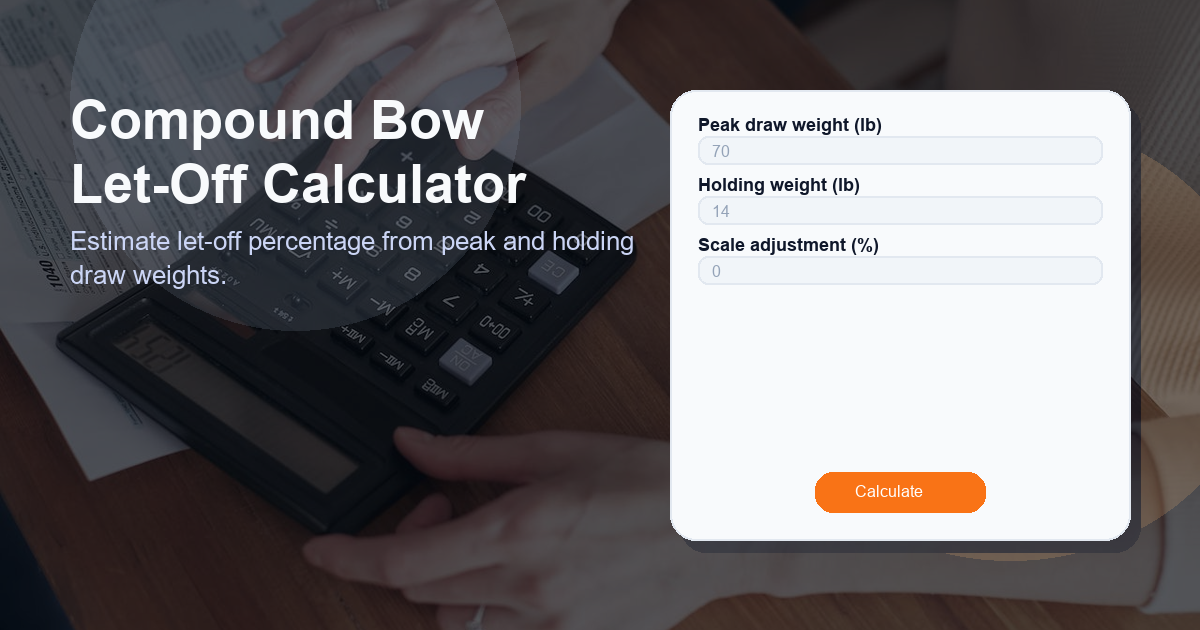
This calculator allows users to input their peak draw weight, holding weight, and any necessary scale adjustment percentage. By providing these values, the calculator estimates the let-off percentage, helping archers make informed decisions about their equipment and shooting technique.
How to Use the Compound Bow Let-Off Calculator
Using the Compound Bow Let-Off Calculator is straightforward and user-friendly. Here’s a step-by-step guide:
- Input Peak Draw Weight: Enter the peak draw weight of your compound bow in pounds (lb). This is the maximum weight you will need to pull to draw the bow fully.
- Input Holding Weight: Enter the holding weight in pounds (lb). This is the weight you will hold once the bow is fully drawn.
- Input Scale Adjustment: If applicable, enter the scale adjustment percentage. This may be necessary if your bow has specific tuning or calibration adjustments.
- Calculate: Click the calculate button to receive your estimated let-off percentage.
Once you have your results, you can better understand how your bow performs and how it may affect your shooting experience.
How the Compound Bow Let-Off Calculator Formula Works
The formula used in the Compound Bow Let-Off Calculator is designed to provide an accurate estimate of let-off percentage based on user inputs. The formula is as follows:
peak_draw_weight_lb > 0 ? (peak_draw_weight_lb * (1 + scale_adjust_percent / 100) - holding_weight_lb) / (peak_draw_weight_lb * (1 + scale_adjust_percent / 100)) * 100 : 0
Here’s a breakdown of the components:
- Peak Draw Weight (lb): The maximum weight required to draw the bow.
- Holding Weight (lb): The weight you hold once the bow is drawn.
- Scale Adjustment (%): A percentage adjustment to account for any tuning or calibration of the bow.
This formula calculates the let-off percentage by determining how much weight is reduced from the peak draw weight once the bow is held at full draw. The result is expressed as a percentage, giving archers a clear understanding of how much easier it is to hold the bow drawn.
Use Cases for the Compound Bow Let-Off Calculator
The Compound Bow Let-Off Calculator has several practical applications for both novice and experienced archers:
- Equipment Selection: When purchasing a new compound bow, understanding the let-off can help archers choose a bow that fits their shooting style and comfort level.
- Tuning Bows: Archers can use the calculator to fine-tune their bows, ensuring they achieve optimal let-off for their specific needs.
- Training and Technique Improvement: Knowing the let-off percentage can assist in developing better shooting techniques, enabling archers to maintain steadiness and accuracy.
- Competitive Shooting: In competitive environments, understanding let-off can provide a significant advantage, allowing archers to focus on their aim rather than the physical strain of holding the bow.
Other Factors to Consider When Calculating Let-Off
- Bow Design: Different bow designs can have varying let-off characteristics. Some bows are engineered for higher let-off, while others are designed for a more traditional feel.
- Cam System: The type of cam system used in the bow can significantly affect let-off. Bows with specific cam designs may provide different let-off percentages.
- Draw Length: The length of the draw can also impact how let-off is experienced. A longer draw may lead to a different feel in terms of let-off.
- Personal Preference: Ultimately, an archer’s personal comfort and shooting style should guide their choice of bow and let-off percentage.
Frequently Asked Questions
What is let-off in a compound bow?
Let-off refers to the reduction in draw weight experienced by an archer once the bow is fully drawn. It allows for easier holding of the bow at full draw, improving accuracy and comfort.
How does let-off affect shooting performance?
A higher let-off percentage can lead to improved shooting performance by reducing the physical strain on the archer, allowing for better focus on aim and technique.
Can I adjust the let-off on my compound bow?
Yes, let-off can often be adjusted by changing the cam system or tuning the bow. Consult your bow’s manufacturer for specific guidance on adjustments.
Why is the scale adjustment percentage important?
The scale adjustment percentage accounts for any tuning or calibration of the bow. It ensures that the let-off calculation reflects the bow’s actual performance.
Is the let-off percentage the same for all bows?
No, let-off percentages can vary significantly between different bows and cam systems. It’s essential to use the calculator to find the specific let-off for your bow.