Cold-water diving demands more from a torch than headline lumen ratings. Thick gloves, reduced visibility, long immersion times, and demanding entries all make grip, controls, sealing, and battery reliability just as important as beam intensity.
We’ve gathered 10 diving lights spanning compact backup torches, rechargeable models, high-output primary lights, and multi-pack options. Use the guide below to match brightness, runtime, beam behavior, and durability to your usual dive conditions.
Contents
- Best 10 Diving Torches for Cold Water Picks for 2026
- Long-Range Backup – ORCATORCH D530
- Rechargeable Value – 2000-Lumen Scuba Diving Flashlight
- Technical Power – ORCATORCH D710
- Spot-and-Flood Versatility – Wurkkos DL05
- Budget Backup Pair – Compact 3-Mode Dive Lights
- Deep-Dive Aluminum Pick – 1000-Lumen Rechargeable Torch
- Long-Range Rechargeable Pick – WINDFIRE DM06 Dive Light
- Best Value Pair – Compact 1200-Lumen Dive Lights
- Best for Hands-Free Use – BlueFire 1100-Lumen Dive Light
- Best Deep-Rated Option – 3000-Lumen SST25 Dive Light
- How We Picked the Best Diving Torches for Cold Water
- Quick Comparison
- Key Buying Factors for Diving Torches for Cold Water
- Who Should Buy Which Diving Torches for Cold Water?
Best 10 Diving Torches for Cold Water Picks for 2026
Long-Range Backup

- 1,500 lumens with a focused 7-degree beam
- 150-meter depth rating and IP68 waterproofing
- Three modes with a lockable side switch
Best For: Cave, wreck, and night diving
Rechargeable Value
2000-Lumen Scuba Diving Flashlight

- 2,000 lumens and two-hour runtime
- Rechargeable battery and charger included
- IPX8 waterproofing rated to 80 meters
Best For: Recreational and night diving
Technical Power

- 3,000-lumen temporary turbo mode
- 6-degree beam and 150-meter depth rating
- Up to seven hours on low with power indicator
Best For: Technical, cave, wreck, and night diving
Spot-and-Flood Versatility

- 6,000 lumens with 13-degree spot and 81-degree flood
- Up to 14 hours on low
- 100-meter IPX8 rating with USB-C charging
Best For: Divers needing adaptable spot and flood lighting
Budget Backup Pair
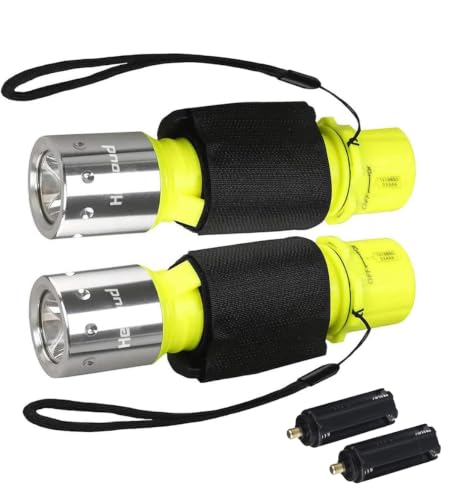
- Two-light set for shared use or backup
- IPX8 rated to 80 feet
- High, low, and strobe modes
Best For: Beginner divers and recreational water activities
Deep-Dive Aluminum Pick

- Up to 1000 lumens
- Rated to 80 meters underwater
- Five modes and aluminum housing
Best For: Deeper dives, caves, and night exploration
Long-Range Rechargeable Pick

- Focused 12-degree beam
- IPX8/IP68-rated to 60 meters
- Power indicator and rechargeable battery
Best For: Night diving and detail-focused underwater exploration
Best Value Pair
Compact 1200-Lumen Dive Lights

- Two-pack offers a spare or buddy light
- IPX8-rated to 80 feet
- Three modes with wristband and lanyard
Best For: Recreational divers wanting two compact underwater torches
Best for Hands-Free Use
BlueFire 1100-Lumen Dive Light

- 1100-lumen neutral-white LED
- IPX8-rated to 80 feet
- Wristband, lanyard, and flexible battery options
Best For: Divers needing a secure, versatile handheld light
Best Deep-Rated Option

- Up to 3000 lumens
- 328-foot stated submersion depth
- Four modes plus adjustable focus
Best For: Divers wanting high output and a deeper-rated handheld torch
Long-Range Backup – ORCATORCH D530
For divers comparing diving torches for cold water, the ORCATORCH D530 emphasizes a focused beam, straightforward controls, and a compact aluminum body. Its 6,500K cold-white light and 7-degree beam are suited to looking into cracks, caves, and wreckage, while the 150-meter depth rating supports demanding dives.
Best For: Cave, wreck, and night divers who prioritize long-distance visibility in a compact torch.
Pros:
- 1,500-lumen output with a narrow beam designed for long-range illumination.
- Three modes—high, low, and SOS—plus a one-handed titanium-alloy side switch.
- IP68 waterproof construction rated to 150 meters, with a safety-lock function.
- Compact aluminum design that can serve as either a primary or backup light.
Cons:
- Standalone lithium batteries are not included or sold with the product.
- The narrow beam is not intended for broad-area lighting or underwater video.
- The notes caution against using it on land because of overheating and reduced light intensity.
The D530 is a focused, practical choice when penetration and signaling matter more than wide illumination. Confirm the required battery arrangement before your dive and use it primarily underwater as intended.
Rechargeable Value – 2000-Lumen Scuba Diving Flashlight
This rechargeable torch is a practical option among diving torches for cold water, combining a 2,000-lumen beam with a built-in 2,200mAh battery. Its 80-meter waterproof rating, aluminum housing, and supplied charger make it a ready-to-use choice for night dives, spearfishing, and underwater inspection.
Best For: Recreational divers seeking a rechargeable, compact torch with useful included accessories.
Pros:
- 2,000-lumen output with up to two hours of continuous runtime.
- Built-in rechargeable battery reportedly reaches a full charge in about 86 minutes.
- IPX8 waterproofing to 80 meters, with dual O-rings and a shock-resistant aluminum body.
- Includes charger, wrist strap, and two spare O-rings.
Cons:
- Its 80-meter depth rating is lower than the deeper-rated options in this roundup.
- The integrated battery may be less convenient than a replaceable-battery design on extended trips.
- The notes describe a focused beam, which may not suit divers wanting broad illumination.
With charging hardware and maintenance spares included, this light keeps setup simple. It is best suited to dives within its 80-meter rating where two hours of runtime and a compact form are sufficient.
Technical Power – ORCATORCH D710
The ORCATORCH D710 is a high-output pick for divers comparing diving torches for cold water and needing a strong, tightly controlled beam. It reaches 3,000 lumens in temporary turbo mode, offers three regular brightness levels, and is built for dives down to 150 meters.
Best For: Technical, cave, wreck, and night divers who need focused illumination and extended low-mode runtime.
Pros:
- Up to 3,000 lumens with a focused 6-degree beam for long-distance visibility.
- Four settings include turbo, high, medium, and low; low mode can run for up to seven hours.
- Real-time power indicator helps monitor remaining charge during a dive.
- Triple O-rings, 5mm tempered glass, and a 150-meter waterproof rating support rugged use.
Cons:
- The 3,000-lumen turbo setting is temporary and activates only while the button is held.
- Standalone lithium batteries are not included or sold with the product.
- The narrow beam is not designed for underwater video or wide-angle lighting.
The D710 stands out when beam control, depth rating, and battery-status visibility are priorities. Its turbo feature is useful for brief bursts, while the lower settings are more appropriate for conserving power through longer dives.
Spot-and-Flood Versatility – Wurkkos DL05
The Wurkkos DL05 offers a flexible approach to diving torches for cold water with both a narrow 13-degree spotlight and an 81-degree floodlight. Its claimed 6,000-lumen maximum, Type-C charging, and long low-mode runtime make it suitable for divers who want one light for close viewing and longer-range tasks.
Best For: Divers who want adjustable spot and flood illumination, long low-mode runtime, and mounting flexibility.
Pros:
- Spot-and-flood design supports both focused viewing and broad reef illumination.
- Up to 6,000 lumens, with a reported reach of 429 meters/1,408 feet.
- Up to 14 hours of runtime on low and 2.7 hours on medium.
- IPX8 waterproofing to 100 meters, lockout mode, USB-C cable, spare O-rings, and lanyard included.
Cons:
- The 100-meter depth rating is below the 150-meter ratings of some competing models here.
- The listed specifications contain battery-type inconsistencies, so buyers should verify the current battery and charging details.
- At about 365 grams, it is heavier than the compact 2000-lumen option.
The DL05 is the most versatile choice in this group for switching between broad and focused light. Its long low-mode runtime is particularly useful for extended dives, while the built-in mounting thread adds flexibility for compatible brackets.
Budget Backup Pair – Compact 3-Mode Dive Lights
If you need diving torches for cold water as a backup set or for shared use, this two-pack offers a straightforward option. Each light has an IPX8 rating for use down to 80 feet, a shock-resistant plastic body, and three lighting modes.
Best For: Beginner divers, snorkeling, boating, and keeping a spare light available.
Pros:
- Two lights are included for shared use or redundancy.
- IPX8 waterproofing supports diving to a stated 80-foot depth.
- High, low, and strobe modes provide simple lighting flexibility.
- Built-in rechargeable battery and included wristband/lanyard support convenient handling.
Cons:
- The plastic construction may feel less rugged than an aluminum dive torch.
- The supplied notes do not state a lumen output or runtime.
- The built-in battery is non-detachable.
This is a practical entry-level choice when value and having two lights matter more than advanced controls or published performance figures. Its 80-foot rating makes it better suited to recreational diving than very deep exploration.
Deep-Dive Aluminum Pick – 1000-Lumen Rechargeable Torch
For divers comparing diving torches for cold water, this aluminum-bodied model emphasizes depth capability and adjustable output. It produces up to 1000 lumens, is rated for underwater use to 80 meters, and includes a battery and USB charger.
Best For: Divers who want a rechargeable handheld torch for deeper dives, caves, or night use.
Pros:
- Rated for underwater use to a stated 80-meter depth.
- Up to 1000 lumens provides a strong white beam.
- Five modes include high, medium, low, strobe, and SOS.
- Aluminum alloy construction has an anti-abrasive coating and 1.5-meter drop capability.
Cons:
- At about 331 grams, it is heavier than the compact plastic and lightweight options.
- The supplied notes describe the water resistance as IP8-rated rather than specifying a complete IPX8 designation.
- Runtime details are not provided.
With its deeper stated operating range, metal construction, and five-mode rotary switch, this is the most capability-focused option of the three. It is a sensible fit for demanding underwater environments, provided the added weight is acceptable.
Long-Range Rechargeable Pick – WINDFIRE DM06 Dive Light
The WINDFIRE DM06 is a compact option for diving torches for cold water, combining a focused 12-degree beam with a rechargeable battery and real-time power indicator. Its IPX8/IP68-rated design is stated for depths up to 60 meters, while the narrow beam is designed to highlight underwater details.
Best For: Night divers who want a compact, focused beam and visible battery-status feedback.
Pros:
- The 12-degree spotlight is designed for focused underwater illumination.
- Three modes include high, low, and SOS.
- The power indicator shows green, orange, or red remaining-charge status.
- Aircraft-grade aluminum, toughened glass, and three O-rings support water and impact resistance.
Cons:
- High-mode runtime is listed at up to 2.8 hours, which may require charging on longer outings.
- The built-in battery is non-detachable.
- Its stated maximum depth of 60 meters is lower than the 80-meter rating of the aluminum alternative.
This model stands out for portability and usability rather than maximum depth. The power indicator, focused beam, wrist strap, and storage case make it a well-equipped choice for night diving and other low-light activities.
Best Value Pair – Compact 1200-Lumen Dive Lights
If you need diving torches for cold water and want a backup light for a buddy or gear bag, this two-pack is a practical option. Each torch offers a claimed 1200 lumens, IPX8 waterproofing to 80 feet, and three lighting modes for general underwater use.
Best For: Divers who want two compact handheld lights for recreational diving, snorkeling, or emergency backup.
Pros:
- Two lights provide a convenient spare or buddy setup.
- IPX8-rated design is specified for use to 80 feet underwater.
- High, low, and strobe modes support regular lighting and signaling.
- Wristbands and lanyards make the lights easier to secure underwater.
Cons:
- The built-in batteries are non-detachable, so battery replacement may be less convenient.
- The stated depth rating is lower than some deeper-rated dive lights.
Its compact ABS plastic and aluminum-alloy construction, along with shock- and drop-resistant design claims, make this a sensible everyday or backup choice. For cold-water diving, pair it with gloves that still allow access to the mode control and keep the included straps secured.
Best for Hands-Free Use – BlueFire 1100-Lumen Dive Light
For divers comparing diving torches for cold water, the BlueFire combines a bright 1100-lumen neutral-white LED with an IPX8 rating for use to 80 feet. Its wrist strap and lanyard help keep the torch accessible when wearing bulky equipment or managing other gear.
Best For: Recreational divers, snorkelers, and boaters who value a secure carrying system and flexible battery options.
Pros:
- 1100-lumen neutral-white LED provides strong illumination.
- IPX8 waterproofing is specified for depths up to 80 feet.
- High, low, and strobe modes cover routine lighting and signaling.
- Can use a rechargeable battery or three AAA batteries, though batteries are not included.
Cons:
- The listed 80-foot depth rating may not suit deeper dives.
- Three AAA batteries are required if using disposable cells, and they are not included.
The aluminum-alloy head and coated ABS body are designed for shock resistance and underwater durability. The adjustable Velcro wristband and lanyard are especially useful when cold-water gloves make handling small equipment more difficult.
Best Deep-Rated Option – 3000-Lumen SST25 Dive Light
Among these diving torches for cold water, this model stands out for its claimed 3000-lumen output and 328-foot submersible depth. It also adds four modes, adjustable focus, and a built-in lithium-ion battery for divers who want a high-output handheld torch.
Best For: Divers seeking a high-output light with a deeper stated submersion rating for scuba, night diving, or outdoor use.
Pros:
- SST25 LED is rated for up to 3000 lumens.
- 328-foot stated submersible depth exceeds the other listed models.
- High, medium, low, and strobe modes offer more brightness control.
- Aluminum-alloy construction is described as shock-proof and drop-proof.
Cons:
- The built-in lithium-ion battery is non-detachable.
- At about 15.17 ounces, it is heavier than the smaller options.
- Higher output may require more careful battery management during extended dives.
This is the most capable choice on paper for deeper or darker underwater environments, while the lanyard helps with carrying. Cold-water users should confirm charging arrangements before trips because the supplied battery is built in rather than easily swapped.
How We Picked the Best Diving Torches for Cold Water
We compared the listed lights by the features that matter most underwater: stated output, waterproofing, battery and charging setup, operating modes, runtime claims, grip design, and suitability for use with thick gloves. We also considered whether each torch makes more sense as a primary light, backup, buddy light, or value-focused multipack.
Lumen figures are useful for broad comparison, but they are not a complete measure of underwater performance. Beam focus, optical quality, battery condition, water clarity, and how quickly output drops during a dive can have a greater practical effect.
Quick Comparison
| Best suited to | Look for | Why it matters in cold water |
|---|---|---|
| Primary night or deep-diving light | High output, long runtime, secure grip | Improves distance and navigation while reducing frequent battery changes |
| Daytime or low-visibility backup | Simple controls, compact body, reliable sealing | Easy to deploy if a primary light fails |
| Training, travel, or buddy use | Two-pack value and rechargeable batteries | Provides a spare without adding much planning or cost |
Key Buying Factors for Diving Torches for Cold Water
Brightness and Beam Pattern
Choose output according to conditions rather than choosing the largest number. A focused beam helps with signaling and penetrating darker water, while a broader beam can illuminate nearby surroundings. Multiple brightness levels are useful for conserving battery power and avoiding unnecessary glare.
Runtime and Charging
Check whether the advertised runtime applies to the highest setting or a lower mode. Rechargeable models can be convenient, but confirm the charging method, battery access, spare-battery availability, and whether charging must happen outside the torch. For remote trips, a replaceable battery system may be easier to manage.
Cold-Water Handling
Look for a substantial body, textured grip, wrist lanyard, and controls that can be operated with dry or wet gloves. A twist switch may be simpler than a small button, but it should not be so stiff that it is difficult to use underwater. Test the torch on land while wearing the gloves you actually dive in.
Waterproofing and Durability
IPX8 labeling indicates protection for continuous immersion under specified conditions, but it does not automatically guarantee suitability for every depth or impact. Review the stated depth rating, inspect O-rings, rinse the light with fresh water after use, and keep seals clean and lightly maintained.
Who Should Buy Which Diving Torches for Cold Water?
Choose a high-output rechargeable model for night dives, deeper profiles, or consistently poor visibility, provided its runtime and controls suit your dive plan. A compact 1100- to 1500-lumen torch is often a sensible primary option for recreational daytime diving and a strong backup for more demanding dives.
Two-packs are best for new divers, buddy teams, travel kits, or anyone who wants redundancy at a lower cost. A simple 2000-lumen class light can be a practical middle ground, while a multi-mode torch is preferable when you need to balance maximum brightness with longer runtime. Whatever you choose, carry a separate backup on any dive where losing illumination could affect navigation or ascent.