Finding the right solar panel for a boat is about more than wattage. You need a panel that can flex to match curved surfaces, handle marine weather, and deliver dependable charging without adding unnecessary weight.
This roundup of the best flexible solar panels for boats in 2026 focuses on practical performance, durability, and real-world installation value so you can choose a setup that fits your deck, cabin, or storage space.
Contents
- Best 10 Flexible Solar Panels for Boats Picks for 2026
- Flex-Mount Marine Pick – Renogy 100W Flexible 12V Panel
- Portable Deck Charger – Renogy 200W Solar Blanket
- Budget Curved-Surface Panel – 100W 9BB Flexible Marine Solar
- High-Efficiency Curve Pick – BougeRV Arch Pro 200W Flexible Panel
- Scalable Four-Piece Choice – DOKIO 400W Flexible Solar Panels for 12V Systems
- High-Efficiency Curved-Surface Pick – BougeRV Arch 200W N-Type Flexible Panel
- Lightweight Marine-Ready Pick – Solarapex 100W Flexible Solar Panel
- Premium High-Output Pick – Renogy 200W Flexible Solar Panel for Boats
- Best Lightweight Marine Option – Renogy 100W Lightweight Flexible Panel
- Best Budget-Friendly 100W Pick – Renogy 100W Ultra Lightweight Flexible Panel
- How We Picked the Best Flexible Solar Panels for Boats
- Quick Comparison of Flexible Solar Panels for Boats
- Who Should Buy Which Flexible Solar Panels for Boats?
Best 10 Flexible Solar Panels for Boats Picks for 2026
Flex-Mount Marine Pick
Renogy 100W Flexible 12V Panel

- 22% efficient 100W flexible panel
- Only 4 lb and 0.08 in thin
- Built for boats, RVs, and curved surfaces
Best For: Boat owners needing a lightweight panel for curved mounting areas
Portable Deck Charger
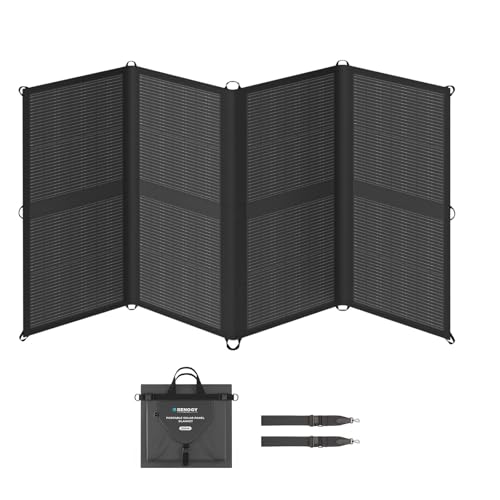
- 25% efficiency with 200W output
- 8.82 lb blanket folds to backpack size
- USB-A, USB-C, and battery charging support
Best For: Boat users who want a stowable portable charging solution
Budget Curved-Surface Panel
100W 9BB Flexible Marine Solar

- Up to 23% efficiency with 9BB cells
- IP67 junction box for outdoor use
- Thin 0.1 in design bends for irregular surfaces
Best For: Budget-conscious boat owners needing a basic flexible panel
High-Efficiency Curve Pick
BougeRV Arch Pro 200W Flexible Panel

- 25% efficiency with 16BB N-type cells
- Anti-shading bypass diodes improve output stability
- Ultra-thin 2.5mm fiberglass build
Best For: Marine buyers wanting high efficiency and better shade tolerance
Scalable Four-Piece Choice
DOKIO 400W Flexible Solar Panels for 12V Systems

- 4-panel set supports larger 12V/24V builds
- Bends up to 30° for curved surfaces
- ETFE coating and lightweight design aid marine installs
Best For: Boat and RV owners planning an expandable flexible solar setup
High-Efficiency Curved-Surface Pick
BougeRV Arch 200W N-Type Flexible Panel

- Up to 25% efficiency with N-type 16BB cells
- Flexible up to 270° for curved boat surfaces
- ETFE coating and fiberglass layers boost durability
Best For: Compact marine installs where efficiency and curve fit are priorities
Lightweight Marine-Ready Pick
Solarapex 100W Flexible Solar Panel

- IP68 waterproofing and ETFE coating for marine use
- Thin, lightweight panel fits curved surfaces
- Eyelets, tape, or silicone allow flexible mounting
Best For: Boats and yachts needing a simple waterproof flexible panel
Premium High-Output Pick
Renogy 200W Flexible Solar Panel for Boats

- 200W output for higher daily charging
- Bends up to 240 degrees for curved surfaces
- IP67 junction box and easy install features
Best For: Boat owners who want more output from a flexible panel
Best Lightweight Marine Option
Renogy 100W Lightweight Flexible Panel
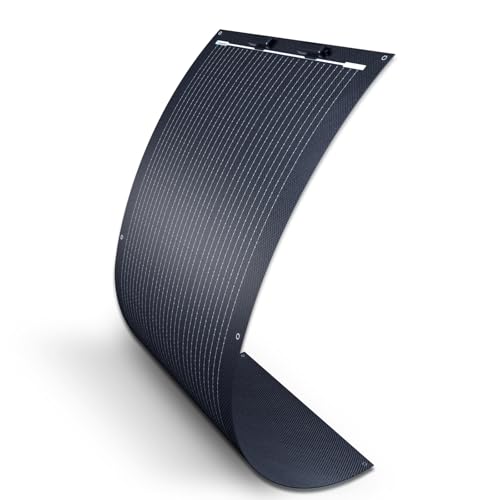
- Lightweight build is easier to handle on boats
- Bends up to 240 degrees for curved surfaces
- IP67 waterproof design with pre-drilled mounting holes
Best For: Boaters who want a lighter 100W flexible panel
Best Budget-Friendly 100W Pick
Renogy 100W Ultra Lightweight Flexible Panel
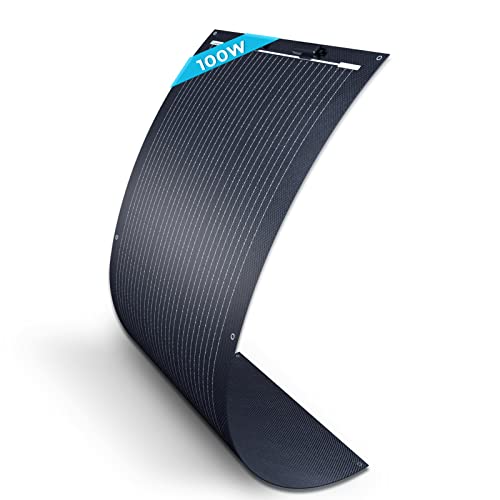
- 22% efficiency and 100W output
- 240-degree bendability for curved surfaces
- Light 5.3-pound build with IP67 protection
Best For: Boaters wanting a compact, weather-resistant 100W panel
Flex-Mount Marine Pick – Renogy 100W Flexible 12V Panel
If you want flexible solar panels for boats that can follow curved decking or a cabin roof, this Renogy 100W panel is built for that kind of install. It stays slim, light, and flexible while still offering a 22% high-efficiency monocrystalline build for off-grid charging.
Best For: Boat owners who need a lightweight, low-profile panel for curved or uneven mounting surfaces.
Pros:
- Extremely flexible for curved roofs and other uneven surfaces
- Lightweight at 4 pounds with a thin 0.08-inch profile
- 22% efficiency and 100W output for marine and other off-grid uses
- Built to handle wind and snow load testing for added durability
Cons:
- Single-panel output may be modest for larger boat power needs
- Designed for flexible mounting, not portable carry-and-go use
Overall, this is a practical choice if your priority is simple, low-bulk marine mounting rather than maximum wattage. It fits well where rigid panels are awkward and is aimed squarely at curved-surface installs.
Portable Deck Charger – Renogy 200W Solar Blanket
For buyers comparing flexible solar panels for boats, this Renogy solar blanket stands out more for portability than permanent mounting. It folds down small, weighs just 8.82 pounds, and delivers 25% efficiency with options to charge devices or a 12V/24V battery system.
Best For: Boaters who want a lightweight, stowable solar option for charging gear or a power station on the go.
Pros:
- Very portable 8-fold design packs down small for tight storage spaces
- 25% high-efficiency N-type cells for strong output in limited space
- USB-A and USB-C outputs add convenient device charging
- IP65-rated build with ETFE lamination and reinforced stitching
Cons:
- Designed as a blanket-style portable panel, not a permanent boat mount
- Best suited to charging needs rather than fixed marine integration
This is a smart pick if you want flexible solar on a boat but need something easy to stow when not in use. It offers versatility, fast packing, and broad charging options without taking up much space.
Budget Curved-Surface Panel – 100W 9BB Flexible Marine Solar
This 100W panel is a straightforward option for flexible solar panels for boats when you want a thin, install-friendly module for uneven surfaces. It uses 9BB monocrystalline cells, an IP67 junction box, and ETFE materials to support outdoor marine-style use.
Best For: Buyers looking for a simple 100W flexible panel for boats, trailers, and other irregular surfaces.
Pros:
- Extremely flexible with a 45cm minimum bend radius
- Lightweight at 4.4 lb and only about 0.1 inches thick
- Up to 23% conversion efficiency with 9BB cell design
- IP67 junction box helps block water splashes and dust
Cons:
- Lower wattage than 200W options if you need more onboard power
- Basic panel-only package with no extra accessories listed
For a compact marine setup, this panel focuses on flexibility, weather resistance, and simple installation. It makes sense when you want a budget-friendly route into boat solar without going oversized.
High-Efficiency Curve Pick – BougeRV Arch Pro 200W Flexible Panel
Among flexible solar panels for boats, this BougeRV Arch Pro model is geared toward owners who want strong output on curved surfaces and better performance in partial shade. It combines 25% efficiency, anti-shading bypass diode tech, and a fiberglass flexible body that stays thin and lightweight.
Best For: Boat and marine setups that need a flexible high-efficiency panel with better shading tolerance.
Pros:
- 25% conversion efficiency with 16BB N-type cells
- Anti-shading bypass diode design helps stabilize output in low light
- Very thin at 2.5mm and light at 7.94 lb
- ETFE coating adds scratch, self-cleaning, and sand-proof protection
Cons:
- Open-circuit voltage may not suit every power station
- More of a specialty curved-surface panel than a universal plug-and-play option
This panel makes sense if your boat gets partial shade or you need a more adaptable install on curved surfaces. It is a premium-style flexible option with strong efficiency and a durability-focused outer build.
Scalable Four-Piece Choice – DOKIO 400W Flexible Solar Panels for 12V Systems
If you need flexible solar panels for boats with room to grow, this 4-panel DOKIO set is built for scalable 12V or 24V setups. The semi-flexible design bends up to 30°, and the ETFE surface plus lightweight build make it a practical option for curved marine roofs and other mobile installs.
Best For: Boat owners and mobile users who want a flexible, expandable solar set for curved surfaces.
Pros:
- Four 100W panels let you build a larger system over time.
- Semi-flexible design bends up to 30° for curved or irregular surfaces.
- ETFE coating offers better light transmission and weather resistance than PET.
- Lightweight panels are easier to handle, mount, or remove on mobile setups.
Cons:
- Needs proper ventilation space to help control heat.
- Should not be mounted directly on combustible materials.
- Output depends on using the right PWM or MPPT controller and staying within rating.
This is a sensible pick if you want flexible solar panels for boats and other off-grid builds that may expand later. The main appeal is the four-panel format, but safe installation and airflow matter to keep performance steady.
High-Efficiency Curved-Surface Pick – BougeRV Arch 200W N-Type Flexible Panel
For flexible solar panels for boats where space and efficiency matter, this BougeRV Arch panel focuses on high conversion and strong durability. Its N-type 16BB cell design, ETFE coating, and 270° flexibility make it well suited to curved marine surfaces and compact installs.
Best For: Buyers who want a high-efficiency, lightweight flexible panel for curved marine or RV surfaces.
Pros:
- Up to 25% conversion efficiency from the N-type 16BB cell design.
- Flexible up to 270° for more curved surfaces than many semi-flexible panels.
- Double fiberglass layers help reduce crack risk and improve durability.
- ETFE surface is anti-scratch, self-cleaning, and sand-proof.
Cons:
- Open-circuit voltage may not work with some power stations.
- Real-world output will vary with sunlight, angle, and temperature.
- Single-panel 200W format may not suit users wanting a multi-panel bundle.
This is a strong pick if you want a compact, durable panel that can follow a boat or vehicle curve more easily. It stands out for efficiency and build quality, but checking voltage compatibility first is important.
Lightweight Marine-Ready Pick – Solarapex 100W Flexible Solar Panel
If you want flexible solar panels for boats with an emphasis on easy handling and weather resistance, this Solarapex 100W panel is a straightforward option. It uses a fiberglass laminate structure, ETFE coating, and IP68 waterproofing, and its thin, lightweight design is made to conform to curved surfaces like yacht or RV roofs.
Best For: Boat and marine users who want a lightweight, waterproof flexible panel for curved installs.
Pros:
- IP68 waterproofing and ETFE coating suit harsh outdoor and marine conditions.
- Lightweight, thin design is easy to place on curved surfaces.
- 4 pre-drilled eyelets support quick screw mounting.
- Can also be installed with 3M tape or outdoor silicone for non-permanent setups.
Cons:
- Single 100W panel may be too small for larger power demands.
- Needs proper mounting choice based on whether you want a permanent or drill-free setup.
- Performance still depends on real-world sunlight and conditions.
This panel is a practical choice if your priority is a simple, durable marine panel that is easy to mount. It combines weather protection with flexible installation options, though buyers needing more total wattage may need to scale up.
Premium High-Output Pick – Renogy 200W Flexible Solar Panel for Boats
If you want flexible solar panels for boats with more charging headroom, this Renogy 200W panel is built for higher daily output and curved installs. It’s a practical fit when you need more wattage from a lightweight panel that can bend up to 240 degrees and handle marine-style mounting needs.
Best For: Boat owners who want a higher-output flexible panel for curved surfaces and compact roof space.
Pros:
- 200W output can provide about 1000 watt-hours per day in 5 hours of sunlight
- 240-degree flexibility suits curved boat surfaces
- IP67 waterproof junction box and connectors help with marine durability
- Pre-drilled mounting holes and 12 AWG cables simplify installation
Cons:
- Heavier than 100W flexible options at 10.8 pounds
- Size may be too large for smaller boat decks or cabins
- Real-world output still depends on sun availability and mounting conditions
This is the strongest choice in the group if your priority is more charging capacity from a flexible marine panel. It balances output, bendability, and weather resistance well for boat use.
Best Lightweight Marine Option – Renogy 100W Lightweight Flexible Panel
For flexible solar panels for boats where low weight matters, this Renogy 100W panel is designed for curved surfaces and easier handling. It offers a lighter build than rigid panels, while still including marine-friendly waterproofing and mounting features for straightforward installs.
Best For: Boat owners who want a lightweight 100W panel for simple curved-surface mounting.
Pros:
- Weighs about one-third of a rigid panel for easier handling
- 240-degree flexibility works well on curved boat surfaces
- IP67 waterproof junction box and connectors support marine use
- Pre-drilled holes and 2.3-foot cables make installation easier
Cons:
- 100W output is lower than higher-capacity flexible panels
- Longer charging times may be needed for larger battery banks
- Best suited to light-to-moderate power needs rather than heavy loads
This is a solid choice if you want a simpler, lighter marine panel without moving up to a larger 200W model. It keeps the installation-friendly features that matter most on boats.
Best Budget-Friendly 100W Pick – Renogy 100W Ultra Lightweight Flexible Panel
This Renogy 100W option is a strong middle-ground choice for flexible solar panels for boats, especially if you want a lightweight panel with proven curved-surface support. It offers the same 240-degree bendability and IP67 protection as a marine-ready panel, while keeping the footprint and power level manageable.
Best For: Boat users who want a compact 100W flexible panel with strong weather resistance.
Pros:
- 22% efficiency helps it make good use of available sunlight
- 240-degree flexibility suits curved boat surfaces
- IP67 waterproof junction box and solar connectors improve durability
- Only 5.3 pounds, making it easy to mount and move
Cons:
- 100W output may be limited for larger onboard power needs
- Power generation depends heavily on sun availability
- Smaller connector cables may not suit every installation layout
If you want a straightforward boat-friendly panel with good efficiency and easy handling, this model is worth a look. It’s a practical pick when you value flexible installation more than maximum wattage.
How We Picked the Best Flexible Solar Panels for Boats
We prioritized panels designed for marine use or adaptable off-grid charging, with attention to flexibility, efficiency, weather resistance, weight, and mounting practicality. For boats, the best options balance bend radius, waterproofing, and usable output rather than headline wattage alone.
Quick Comparison of Flexible Solar Panels for Boats
In general, 100W panels suit smaller battery banks, trickle charging, or limited roof space. 200W options are better for larger daily loads, while multi-panel kits can make sense when you want more total output and room to expand. Portable blanket-style panels are useful if you do not want a permanent mount.
Key Buying Factors
Flexibility: Check the panel’s maximum bend angle and whether it can conform to your boat’s curved deck, cabin top, or bimini-adjacent surface without stressing the cells.
Efficiency: Higher-efficiency cells matter when surface area is limited. On boats, compact panels that produce more power per square foot often outperform larger, cheaper models in real use.
Marine Durability: Look for ETFE or similar protective layers, strong waterproof ratings, and corrosion-resistant components. Salt, spray, vibration, and UV exposure can shorten the life of weaker panels.
Weight and Mounting: Lighter panels are easier to install on curved or weight-sensitive surfaces. Consider whether you need adhesive mounting, zippers/straps, or a portable setup you can stow away.
Voltage and System Match: Make sure the panel voltage and controller match your battery bank and charging system. A panel that looks powerful on paper is not useful if it does not fit your electrical setup.
Who Should Buy Which Flexible Solar Panels for Boats?
If you have a small boat or simple battery maintenance needs, a 100W flexible panel is usually the most practical starting point. If you run a fridge, lights, electronics, or longer weekend trips, a 200W panel or larger kit is a better fit. Boat owners who need temporary power or frequent repositioning should consider portable foldable or blanket-style panels instead of permanent mounts.
For buyers comparing Flexible Solar Panels for Boats, the best choice is the one that matches your available surface area, daily energy use, and tolerance for installation complexity. Focus on fit first, then optimize for efficiency and durability.