The right wetsuit boots can improve warmth, traction, and comfort in everything from scuba diving and snorkeling to surfing and rafting. The best choice depends on water temperature, terrain, sole design, and how securely the boot fits.
We selected 10 options spanning lightweight water shoes, split-toe surf boots, and thicker cold-water dive boots so you can find the right balance of protection, flexibility, and value.
Contents
- Best 10 Wetsuit Boots Picks for 2026
- Durable Tall Pick – Cressi Minorca 3mm Boots
- Board-Feel Pick – O'Neill Ninja 3mm Split-Toe Boots
- Rocky-Shore Pick – Cressi Isla 5mm Crew Boots
- Cold-Water Protection Pick – SEAC Pro HD 6mm Boots
- Maximum Warmth – BARE 5mm OmniRed Dive Boot
- Flexible Traction – hydroleap 5mm Scuba Boots
- Versatile Water Wear – XUKER Neoprene Diving Boots
- Warmth & Secure Fit – Seaskin 5mm Diving Boots
- Comfort-Focused Coverage – Skyone 5mm Dive Booties
- Tall Water-Sports Support – Skyone 5mm Zippered Dive Boots
- How We Picked the Best Wetsuit Boots
- Quick Comparison
- Key Buying Factors for Wetsuit Boots
- Who Should Buy Which Wetsuit Boots?
Best 10 Wetsuit Boots Picks for 2026
Durable Tall Pick

- Tall 3mm neoprene design
- Anti-slip sole with reinforced caps
- Zipper closure for easy entry
Best For: General water sports and added foot coverage
Board-Feel Pick
O'Neill Ninja 3mm Split-Toe Boots

- Anatomical split-toe design
- Textured sole for grip and sensitivity
- Stretch neoprene with ankle strap
Best For: Surfing, paddleboarding, and active water sessions
Rocky-Shore Pick

- Warm 5mm neoprene construction
- Hard anti-slip sole for rocks and pebbles
- Heel design supports open-heel fins
Best For: Canyoning, shore entries, and rugged water access
Cold-Water Protection Pick

- Thick 6mm neoprene for cooler water
- Rigid high-grip molded sole
- Supportive closure and arch design
Best For: Diving and surfing in 50–60°F water
Maximum Warmth

- 5mm neoprene with OmniRed warming fabric
- Heavy-duty sole protects against sharp objects
- Wide-gusset zipper and fin-strap retainer
Best For: Cooler-water diving and snorkeling
Flexible Traction

- Insulating 5mm neoprene construction
- High-traction hard sole for wet surfaces
- Short zipper helps reduce ankle stiffness
Best For: Multi-sport water use and slippery terrain
Versatile Water Wear

- Stretchy neoprene supports a flexible fit
- Anti-slip sole helps protect feet
- Designed for water sports and beach activities
Best For: Flexible, multi-activity water footwear
Warmth & Secure Fit
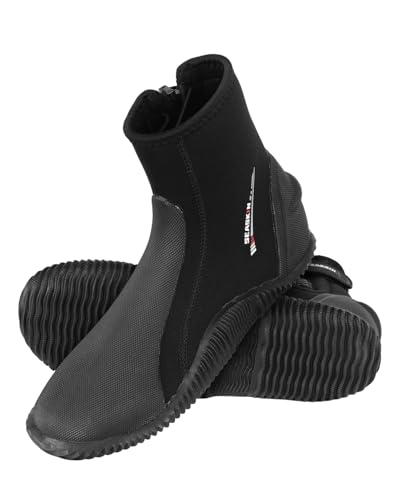
- 5mm neoprene with glued blind stitching
- Anti-slip rubber soles for added protection
- Zippered design with fin-compatible heels
Best For: Divers and kayakers seeking insulated, fin-friendly foot protection
Comfort-Focused Coverage

- Flexible 5mm neoprene construction
- Anti-slip rubber sole and fin-supporting heel
- US 4–12 men’s and women’s sizing
Best For: Versatile water sports and open-heel fin use
Tall Water-Sports Support
Skyone 5mm Zippered Dive Boots

- Tall 5mm neoprene profile
- Anti-slip rubber sole with moderate cushioning
- Zippered fit and US 4–12 sizing
Best For: Divers and paddlers wanting taller, adjustable water boots
Durable Tall Pick – Cressi Minorca 3mm Boots
Cressi Minorca Long 3 mm Crew Diving Boots, Black/Black, US Man's 8 • US Ladies' 9
Check Price On AmazonThese 3mm Cressi wetsuit boots are a practical choice for water sports where coverage, durability, and traction matter. The tall neoprene design, rubber heel and toe caps, anti-slip sole, and zipper closure suit activities ranging from snorkeling and scuba diving to rafting and windsurfing.
Best For: Adults who want tall, versatile boots for general water sports and added foot coverage.
Pros:
- 3mm neoprene helps provide warmth and flexibility.
- Anti-slip sole with reinforced rubber heel and toe caps supports durability and traction.
- Zipper closure makes the boots easier to put on and remove.
Cons:
- The 3mm thickness may provide less insulation than thicker cold-water boots.
- The supplied listing identifies this pair as a size 8 Tall, so sizing availability should be checked.
The Cressi Minorca stands out as an all-purpose option with a tall profile and reinforced construction. It is particularly appealing when easy entry and protection for varied water activities are priorities.
Board-Feel Pick – O'Neill Ninja 3mm Split-Toe Boots
The O’Neill Ninja is a performance-focused choice among wetsuit boots, combining a snug 3mm UltraFlex neoprene fit with a split-toe shape and textured sole. Its design is aimed at surfers, paddleboarders, kayakers, and other users who want grip and underfoot sensitivity.
Best For: Board sports and active water sessions where split-toe control and traction are important.
Pros:
- Split-toe construction supports natural movement, grip, and board feel.
- UltraFlex neoprene provides stretch and comfort, while Krypto Armor adds abrasion protection.
- Watertight seams and an adjustable ankle strap help limit water entry.
- Micro-diamond textured sole is designed for traction and sensitivity.
Cons:
- The snug fit may require sizing down when between sizes, according to the supplied guidance.
- At 3mm, it may be less suited to users seeking the insulation of thicker boots.
With its split toe, secure ankle adjustment, and textured lightweight sole, the Ninja prioritizes control and movement. It is a strong match for high-mobility sessions where board feel is more important than maximum thickness.
Rocky-Shore Pick – Cressi Isla 5mm Crew Boots
The Cressi Isla 5mm crew boots are designed for users who need warmth and protection across varied water activities. Their hard anti-slip rubber sole supports walking on wet surfaces, rocks, or pebbles, while the zipper and flexible neoprene help with everyday use.
Best For: Scuba diving, snorkeling, canyoning, and water activities involving rocky or uneven shore access.
Pros:
- 5mm neoprene provides more insulation than a lighter 3mm boot.
- Hard rubber anti-slip sole helps protect feet on rocks and pebbles.
- Heel design helps keep open-heel fin straps from slipping.
- Zipper from the sole to the ankle supports easier on-and-off.
Cons:
- The rigid protective sole may feel less streamlined than a lighter watersport boot.
- The supplied listing is for a US men’s 12 / women’s 13 size, so fit availability should be confirmed.
The Isla is a practical option when foot protection is as important as warmth. Its combination of 5mm neoprene, a firm sole, and fin-strap support makes it especially useful for shore entries and rugged terrain.
Cold-Water Protection Pick – SEAC Pro HD 6mm Boots
For cooler conditions, the SEAC Pro HD offers 6mm neoprene insulation paired with a rigid molded sole. These wetsuit boots also add a side zipper, hook-and-loop closure, arch support, and a heel air bubble for a more protective and supportive fit.
Best For: Diving and surfing in cooler water around 50 to 60 degrees Fahrenheit.
Pros:
- 6mm neoprene is specified for cooler water conditions.
- Rigid, high-grip molded sole provides protection and traction.
- Side zipper and hook-and-loop closure help secure the fit.
- Arch support and a heel air bubble are designed to reduce stress.
Cons:
- The thicker 6mm construction may feel less flexible than thinner boots.
- The supplied listing identifies this model as XX-Large, corresponding to approximately men’s 11.5–12.5.
The SEAC Pro HD is the most insulation-focused option in this group. Choose it when cooler water, sole protection, and support take priority over a lightweight feel.
Maximum Warmth – BARE 5mm OmniRed Dive Boot
For cooler-water diving and snorkeling, these 5mm wetsuit boots prioritize warmth and foot protection. The high-loft OmniRed inner fabric is designed to react to body heat, while the heavy-duty sole helps shield feet from sharp objects and fin blistering.
Best For: Divers and snorkelers who want maximum insulation and a secure, comfortable boot for cooler water.
Pros:
- 5mm neoprene with high-loft OmniRed inner fabric for enhanced warmth.
- Heavy-duty sole, durable toe and heel caps, and protection against fin blistering.
- Wide-gusset zipper makes entry and removal easier.
- Heel fin-strap retainer helps keep fins in place.
Cons:
- The 5mm construction may feel warmer and less flexible than thinner boots.
- At approximately 2 pounds, they may be heavier than minimalist water shoes.
This is a strong choice when warmth is the main priority. Its thicker construction, protective sole, and fin-retainer details make it especially suited to dedicated diving and snorkeling rather than casual beach use.
Flexible Traction – hydroleap 5mm Scuba Boots
These 5mm wetsuit boots combine neoprene insulation with a rugged hard sole for water activities where traction matters. A short 4-inch zipper is intended to reduce ankle pressure and stiffness compared with a traditional full-length zipper.
Best For: Divers, snorkelers, kayakers, and beach or boat users who want insulated boots with strong wet-surface grip.
Pros:
- 5mm neoprene provides thermal insulation and protection from rocks, coral, and sea urchins.
- High-traction sole is designed for wet and slippery surfaces.
- Short zipper supports a more flexible feel around the ankle.
- Suitable for scuba diving, snorkeling, surfing, kayaking, and sailing.
Cons:
- The shorter zipper may not provide the same wide opening as a full-length zipper.
- The 5mm design may be more substantial than needed for warm-water activities.
Choose these boots when stability on wet ground is as important as warmth in the water. Their hard, patterned sole and shorter zipper give them a practical balance of protection and mobility across multiple water sports.
Versatile Water Wear – XUKER Neoprene Diving Boots
These XUKER neoprene wetsuit boots are designed for water sports, beach activities, and casual use around the water. Their stretchy construction, anti-slip sole, and side zipper provide a flexible fit while helping insulate feet and protect them from rough surfaces.
Best For: Swimmers, snorkelers, paddlers, beachgoers, and anyone seeking flexible water footwear for varied activities.
Pros:
- Stretchy neoprene construction offers a flexible, fitting feel.
- Anti-slip, abrasion-resistant sole helps protect feet on beaches and in the water.
- Flatlock stitching and smooth openings are designed to reduce water entry.
- Works for swimming, snorkeling, kayaking, surfing, beach activities, yoga, and more.
Cons:
- The product notes specify that the boots are not 100% waterproof.
- They are listed as 3mm in the supplied details, so they may provide less insulation than 5mm boots.
This is the most adaptable option of the three for mixed water and beach activities. Its high stretch and broad activity range suit users who value comfort and versatility, while the 3mm profile is better suited to moderate insulation needs.
Warmth & Secure Fit – Seaskin 5mm Diving Boots
These Seaskin wetsuit boots use 5mm neoprene and glued blind stitching to help retain warmth during water activities. Their anti-slip rubber soles, fin-compatible heels, and zippered entry make them a practical option for diving, snorkeling, and kayaking.
Best For: Divers and water-sports users who want warm, supportive boots with fin-friendly heel construction.
Pros:
- 5mm neoprene and glued blind stitching help keep feet warm underwater.
- Anti-slip soles provide protection on potentially hazardous surfaces.
- Rubber heels are designed to fit with dive fins.
- Zipper closure makes the boots easier to put on and remove.
Cons:
- Only one listed size is provided in the supplied details: men’s 10/women’s 11.
- The 5mm construction may feel warmer and less minimal than thinner booties.
Seaskin’s combination of insulation, traction, and fin compatibility makes these a straightforward choice for recreational diving and similar activities, provided the listed sizing matches your feet.
Comfort-Focused Coverage – Skyone 5mm Dive Booties
Skyone’s 5mm neoprene wetsuit boots emphasize flexible comfort, ankle adjustment, and foot protection. The zippered booties have anti-slip rubber soles, glued blind stitching, and a heel design intended to help secure open-heel fins.
Best For: Men and women wanting versatile dive booties for snorkeling, sailing, kayaking, surfing, and similar water activities.
Pros:
- Flexible 5mm neoprene is designed for comfort and warmth.
- Anti-slip soles help protect feet from rocks and sharp objects.
- Heel design helps keep open-heel fin straps in place.
- Listed men’s and women’s sizing spans US 4–12.
Cons:
- The product is specifically noted as not completely waterproof.
- Fit can vary with foot shape, so sizing may require extra care.
- Its open-toe style may offer less coverage than round-toe alternatives.
With broad listed sizing and a durable stitched construction, these Skyone booties suit varied water sports. They are best viewed as wetsuit-compatible diving footwear rather than fully waterproof boots.
Tall Water-Sports Support – Skyone 5mm Zippered Dive Boots
These tall Skyone wetsuit boots pair 5mm neoprene with a zippered design for adjustable ankle fit and full-coverage support. Anti-slip rubber soles, moderate cushioning, and glued blind stitching make them suited to diving and other outdoor water activities.
Best For: Water-sports users who prefer taller, zippered booties with thermal material and traction underfoot.
Pros:
- 5mm neoprene provides flexible insulation for cold-water activities.
- Anti-slip rubber soles help guard against rocks and sharp surfaces.
- Heel design is intended to work with open-heel dive fins.
- Zipper and high-stretch construction support an adjustable fit across US 4–12.
Cons:
- The notes clarify that these are not completely waterproof.
- Tall construction may provide more coverage than needed for warm-weather users.
- Moderate cushioning may not suit shoppers seeking heavily cushioned footwear.
The tall profile and adjustable zipper distinguish this model from simpler water shoes, while the 5mm neoprene and rubber sole support colder or rougher conditions. Check sizing carefully before ordering.
How We Picked the Best Wetsuit Boots
We focused on the features that matter most in real water use: neoprene thickness, sole grip, closure design, fit, ease of entry, and intended activity. The lineup includes versatile low-profile boots as well as taller, heavier designs for colder water and rougher surfaces.
We also considered practical details such as anti-slip rubber or hard soles, split-toe construction, side zippers, and interior insulation. Because conditions vary widely, no single pair is ideal for every diver, surfer, or paddler.
Quick Comparison
| Best For | What to Look For | Typical Choice |
|---|---|---|
| Warm-water activities | 3mm or lighter neoprene, flexible sole | Lightweight booties or water shoes |
| General diving and snorkeling | 5mm neoprene, dependable traction | Standard dive boots with rubber soles |
| Cold-water diving | 6mm insulation, tall shaft, secure closure | Heavy-duty zippered dive boots |
| Surfing | Flexible fit, board feel, split toe | Split-toe surf boots |
| Rocky shore entries | Hard or reinforced anti-slip sole | Protective water boots |
Key Buying Factors for Wetsuit Boots
Neoprene Thickness
Thickness affects warmth and flexibility. Around 3mm suits milder conditions and active sports, while 5mm is a versatile choice for cooler water. For particularly cold dives, 6mm boots provide more insulation but can feel bulkier.
Sole Grip and Protection
Look for rubber, hard, or reinforced soles when walking over rocks, reefs, boat decks, or slippery launch points. Softer soles usually offer better flexibility and board feel, but they provide less protection from sharp or uneven surfaces.
Fit and Closures
A snug fit helps prevent water circulation and reduces blisters, but the boot should not compress your toes or restrict circulation. Zippers make thicker boots easier to put on, while pull tabs and flexible panels can improve entry on simpler designs. Check the manufacturer’s size chart and account for the thickness of any socks you plan to wear.
Toe Design and Height
Split-toe boots can improve stability and board control for surfing. Taller boots generally provide more ankle coverage and warmth, while low-cut styles are lighter and less restrictive for warm-water activities.
Who Should Buy Which Wetsuit Boots?
Choose a Lightweight Boot for Warm Water
Snorkelers, rafters, and casual beach users will usually prefer flexible 3mm options that dry relatively quickly and are easy to pack.
Choose a 5mm Boot for Versatility
A 5mm pair is a practical all-rounder for many divers and surfers. It offers useful warmth and shore protection without the bulk of a heavy cold-water boot.
Choose a Heavy-Duty Boot for Cold or Rugged Conditions
Cold-water divers and people making frequent rocky entries should prioritize thicker neoprene, a taller shaft, secure zippers, and substantial anti-slip soles.
Choose Split-Toe Boots for Surf Control
Surfers who value foot placement and board feel may prefer split-toe construction, provided the sole still offers enough traction for their launch environment.