The right footwear can make kayaking safer and more comfortable, especially when cold water, rocky launches, and slippery riverbanks are part of the trip. These wetsuit boots combine insulation, traction, and foot protection in options suited to different conditions.
Our selection includes low-profile water shoes, thick neoprene dive boots, split-toe designs, and hard-soled styles. Use the guide below to match boot thickness, sole construction, and fit to your kayaking environment.
Contents
- Best 10 Wetsuit Boots for Kayaking Picks for 2026
- Rocky Shore Warmth – Isla 5mm Crew Water Boots
- Cold-Water Comfort – O'Neill Heat 5mm Round Toe Boot
- Everyday Paddle Value – JSNORKLET 3mm Diving Boots
- Precise Foot Control – O'Neill Ninja 3mm Split Toe Boot
- Warmth & Full Coverage – Skyone 5mm Neoprene Dive Boots
- Lightweight Barefoot Feel – OMGear 3mm Neoprene Water Socks
- Traction & Ankle Comfort – hydroleap 5mm Scuba Boots
- Warmth & Grip Pick – XUKER 3mm Neoprene Water Booties
- Cold-Water Coverage Pick – Skyone 5mm Tall Wetsuit Booties
- Adjustable Hard-Sole Pick – BPS Neoprene Dive Boots
- How We Picked the Best Wetsuit Boots for Kayaking
- Quick Comparison
- Key Buying Factors for Wetsuit Boots for Kayaking
- Who Should Buy Which Wetsuit Boots for Kayaking?
Best 10 Wetsuit Boots for Kayaking Picks for 2026
Rocky Shore Warmth

- 5mm neoprene for added warmth
- Hard anti-slip sole for rocky shores
- Zippered entry and fin-friendly heel
Best For: Cold-water kayaking and rocky launches
Cold-Water Comfort
O'Neill Heat 5mm Round Toe Boot

- 5mm neoprene for cold-water use
- Textured sole for grip and protection
- Heel pull tab and reinforced seams
Best For: Cold-water kayaking with a snug fit
Everyday Paddle Value
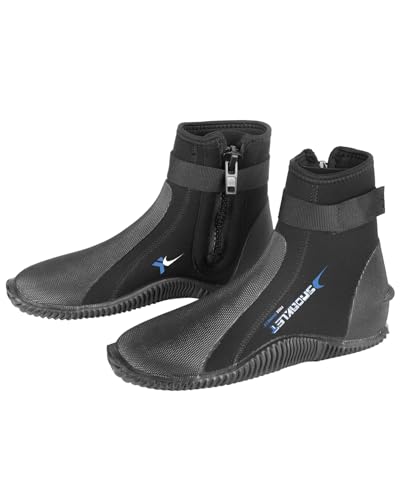
- Flexible 3mm neoprene construction
- Anti-slip rubber sole for shore protection
- Designed for kayaking, canoeing, and more
Best For: Recreational paddling in mild to moderate conditions
Precise Foot Control
O'Neill Ninja 3mm Split Toe Boot

- Split-toe shape for natural movement
- Textured sole for traction and feel
- Krypto Armor adds abrasion protection
Best For: Active kayaking and lightweight foot control
Warmth & Full Coverage
Skyone 5mm Neoprene Dive Boots

- 5mm neoprene for warmth and flexibility
- Anti-slip rubber sole for rocky surfaces
- Zippered, high-top fit with durable stitching
Best For: Cool-water kayaking and multi-sport use
Lightweight Barefoot Feel
OMGear 3mm Neoprene Water Socks

- Flexible 3mm neoprene construction
- Adjustable high-cut ankle helps block sand
- Reinforced anti-slip sole for beach use
Best For: Warm-weather paddling and sandy launches
Traction & Ankle Comfort

- 5mm neoprene for warmth and protection
- Hard, high-traction sole for slippery surfaces
- Short zipper designed to reduce ankle stiffness
Best For: Rough launches and slippery kayaking terrain
Warmth & Grip Pick
XUKER 3mm Neoprene Water Booties

- 3mm neoprene helps retain foot warmth
- Anti-slip rubber sole for wet surfaces
- Flexible pull-on design for multiple water sports
Best For: Recreational kayaking and general water activities
Cold-Water Coverage Pick
Skyone 5mm Tall Wetsuit Booties
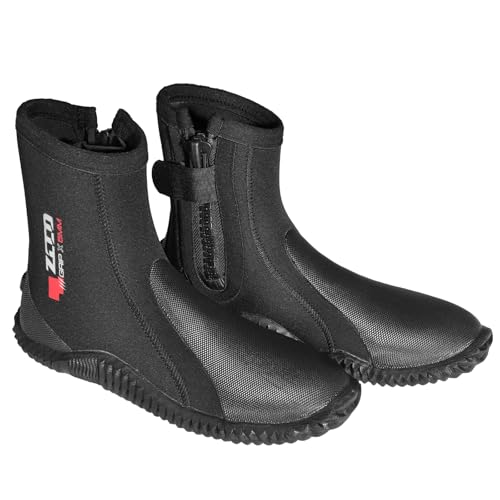
- Thick 5mm neoprene for added insulation
- Zippered fit with full foot coverage
- Heel-back design supports open-heel fins
Best For: Cooler-water kayaking and multi-sport use
Adjustable Hard-Sole Pick
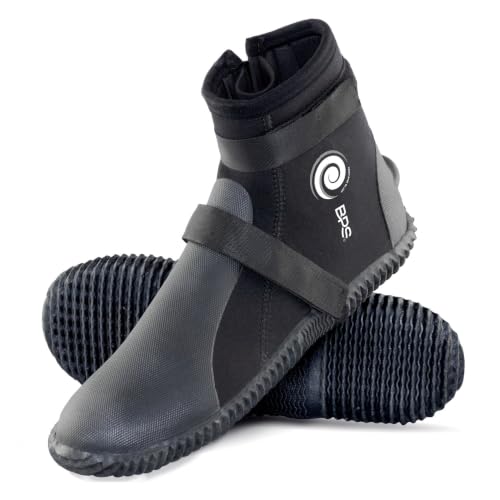
- 3mm, 5mm, and 7mm thickness options
- Hard vulcanized rubber sole for traction
- Adjustable straps help stabilize the fit
Best For: Kayaking and rocky or slippery water access points
Rocky Shore Warmth – Isla 5mm Crew Water Boots
For kayakers who expect rocky launches or cold water, these 5mm Isla boots offer the warmth and underfoot protection worth prioritizing when shopping for wetsuit boots for kayaking. The hard anti-slip rubber sole, built-in sole, and full-length zipper make them practical for both paddling and walking at the shoreline.
Best For: Cold-water kayaking, rocky shore access, and paddlers who want maximum warmth and sole protection.
Pros:
- Thick 5mm neoprene helps keep feet warm during water sports.
- Hard rubber sole adds grip and protection on wet rocks and pebbles.
- Heel design helps keep open-heel fin straps from slipping.
- Zippered entry makes them easier to put on and remove.
Cons:
- Thicker construction may feel warmer and less streamlined than 3mm boots.
- The rugged sole and listed 2-pound item weight may be more than casual paddlers need.
This is the strongest option here for combining cold-water insulation with walkable shore protection. Choose it when rocky terrain and warmth matter more than a minimalist feel.
Cold-Water Comfort – O'Neill Heat 5mm Round Toe Boot
The O’Neill Heat 5mm is a sensible choice among wetsuit boots for kayaking when cold-water warmth and a secure fit are priorities. Its FluidFlex Firewall neoprene, textured rubber sole, reinforced seams, and heel pull tab cover the essentials for wet launches and extended time on the water.
Best For: Cold-water kayakers who want snug insulation, reliable traction, and easier pull-on entry.
Pros:
- 5mm neoprene construction is designed for cold-water warmth.
- Textured rubber sole provides grip and protection on hard surfaces.
- Reinforced seams and anti-flush straps help limit water entry.
- Round toe and heel pull tab support natural movement and easier removal.
Cons:
- The snug fit may require careful sizing; the manufacturer recommends sizing down.
- Round-toe construction does not provide the split-toe feel some paddlers prefer.
With its focus on warmth, watertight construction, and straightforward entry, this boot suits colder kayaking conditions. Check the sizing chart carefully for the close fit needed to retain warmth.
Everyday Paddle Value – JSNORKLET 3mm Diving Boots
These 3mm JSNORKLET boots are a practical middle ground for shoppers seeking wetsuit boots for kayaking across milder seasons. Glued blind stitching helps minimize water entry, while the rubber anti-slip sole protects against rocks and the stretchy neoprene is designed to become more comfortable with wear.
Best For: Recreational kayaking, canoeing, and warm-to-moderate conditions where flexible protection matters.
Pros:
- 3mm neoprene balances warmth with a lighter, more flexible feel.
- Anti-slip rubber sole helps protect feet from rocks and sharp objects.
- Glued blind stitching is intended to minimize water coming in.
- Rubber heel works with dive fins and the boots are listed for kayaking and canoeing.
Cons:
- They are water resistant rather than completely waterproof.
- The initial fit may feel tight until the stretchy neoprene is worn in.
- They offer less insulation than the 5mm alternatives.
This is the most versatile lightweight pick for general paddling and mixed water activities. It makes the most sense when you want moderate warmth and protection without the bulk of a thicker boot.
Precise Foot Control – O'Neill Ninja 3mm Split Toe Boot
The O’Neill Ninja 3mm stands out among wetsuit boots for kayaking when flexibility, grip, and foot control are more important than maximum insulation. Its split-toe shape, micro-diamond textured sole, adjustable ankle strap, and Krypto Armor foot protection are aimed at active movement on and around the water.
Best For: Active kayakers who value split-toe stability, tactile sole feel, and lightweight abrasion protection.
Pros:
- 3mm UltraFlex neoprene offers stretch and comfort for active sessions.
- Split-toe design supports natural movement and increased surface-area grip.
- Micro-diamond textured sole is designed for traction and board feel.
- Krypto Armor helps protect the top of the foot from abrasion.
Cons:
- 3mm thickness provides less cold-water insulation than a 5mm boot.
- Split-toe construction may not suit paddlers who prefer a conventional round toe.
- The close fit and sizing-down recommendation require careful size selection.
This is the performance-oriented choice for paddlers who want a flexible boot with strong contact and movement characteristics. Pick it for active use, but choose a thicker model for especially cold water.
Warmth & Full Coverage – Skyone 5mm Neoprene Dive Boots
If you need wetsuit boots for kayaking that prioritize warmth and foot protection, the Skyone booties are a substantial option. Their 5mm neoprene construction, rubber anti-slip sole, and high-top design are suited to cooler water, rocky launches, and other demanding water activities.
Best For: Kayakers who want thick neoprene insulation, ankle coverage, and a zippered fit for mixed water sports.
Pros:
- 5mm neoprene helps provide warmth and a flexible fit.
- Anti-slip rubber soles help protect against rocks and sharp objects.
- Zipper closure and stretch construction support a snug, adjustable fit.
- Glued and blind-stitched construction is designed for durability.
Cons:
- Listed as not completely waterproof, so it should be viewed as wetsuit-compatible footwear rather than a dry boot.
- The thicker construction may feel warmer and less minimal than lightweight water socks.
Choose these when insulation and coverage matter more than a barefoot feel. The open-heel fin-compatible heel design also adds versatility for users who kayak and participate in other water sports.
Lightweight Barefoot Feel – OMGear 3mm Neoprene Water Socks
For kayakers who prefer flexible wetsuit boots for kayaking rather than a rigid boot, OMGear’s 3mm water socks offer a lightweight alternative. The high-cut neoprene design provides basic warmth and protection while retaining a minimal, barefoot-style feel.
Best For: Warm-weather kayaking, beach launches, and paddlers who want flexible footwear with sand resistance.
Pros:
- Soft 3mm neoprene with four-way stretch supports comfortable movement.
- Reinforced rubber-print soles provide abrasion resistance and traction.
- Adjustable ankle strap helps limit sand and small debris entering the socks.
- Flatlock stitching is designed for a durable, stretchy construction.
Cons:
- Minimal cushioning may provide less structure than hard-soled scuba boots.
- Flatlock stitching is not glued, so the product is positioned more toward spring, summer, and autumn use than cold winter conditions.
These water socks make sense when flexibility, packability, and comfort are priorities. For very cold water or rough, sharp terrain, a thicker boot with a more substantial sole may be a better fit.
Traction & Ankle Comfort – hydroleap 5mm Scuba Boots
These wetsuit boots for kayaking focus on protection and grip, with 5mm neoprene insulation and a hard, high-traction sole. The short zipper is designed to reduce ankle pressure compared with a traditional full-length zipper, which may appeal to paddlers who wear their boots for extended outings.
Best For: Kayakers needing warm, protective footwear for slippery launches, boat decks, and rocky shorelines.
Pros:
- 5mm neoprene helps insulate feet and protect against rocks, coral, and sea urchins.
- Rugged anti-slip sole is designed for wet and slippery surfaces.
- Four-inch short zipper aims to improve flexibility and reduce ankle stiffness.
- Suitable for kayaking, snorkeling, scuba diving, surfing, and sailing.
Cons:
- The thicker 5mm design may be more boot-like than lightweight water socks.
- The supplied notes do not specify sizing details or a waterproof rating.
Consider this pair when secure footing and thermal protection are more important than the lightest possible feel. Its short zipper and hard sole give it a practical balance for active water use and uneven shore access.
Warmth & Grip Pick – XUKER 3mm Neoprene Water Booties
For kayakers seeking wetsuit boots for kayaking, the XUKER 3mm booties offer a balance of warmth, flexibility, and surface protection. Their neoprene-and-nylon construction is designed for water activities, while the rubber sole adds traction on wet sand and other slippery surfaces.
Best For: Recreational kayaking, canoeing, snorkeling, and other warm-to-mild water activities where flexible coverage and grip matter.
Pros:
- 3mm neoprene helps create an insulating thermal layer around the feet.
- Anti-slip rubber sole provides traction on sand and wet surfaces.
- Flexible pull-on design works for both men and women.
- Suitable for kayaking, canoeing, sailing, swimming, and several other water sports.
Cons:
- Not fully waterproof; water can enter the booties.
- Moderate cushioning may provide less underfoot support than a more structured boot.
The XUKER is a practical choice when you want lightweight neoprene coverage and a grippy sole without a bulky design. It is best viewed as a water shoe for warmth and protection rather than a sealed dry boot.
Cold-Water Coverage Pick – Skyone 5mm Tall Wetsuit Booties
Among wetsuit boots for kayaking, the Skyone 5mm booties stand out for their thicker neoprene and tall, full-coverage design. The zipper supports adjustability, while the anti-slip sole and heel-back shape make them useful for paddlers who also wear open-heel fins or spend time in cooler water.
Best For: Kayaking, sailing, snorkeling, and other water activities where extra insulation, ankle coverage, and fin compatibility are priorities.
Pros:
- 5mm neoprene provides substantial insulation and a soft, flexible fit.
- Anti-slip rubber soles help protect against sharp rocks and coral.
- Ankle zipper allows more personalized adjustability.
- Heel-back design helps fit open-heel scuba fins and reduce strap slipping.
Cons:
- Not completely waterproof, so water may enter during use.
- The thicker construction may feel warmer and less minimal than a 3mm bootie.
- Listed coverage is for US men’s sizes 6–11 and women’s sizes 6–11.
The Skyone is a strong option for paddlers who prioritize warmth and coverage over a lightweight feel. Its zipper and fin-friendly heel add useful control for mixed water-sport use, although it should not be treated as a watertight boot.
Adjustable Hard-Sole Pick – BPS Neoprene Dive Boots
For kayakers comparing wetsuit boots for kayaking, the BPS Neoprene Dive Boots combine neoprene warmth with a hard, vulcanized rubber sole. Adjustable straps help reduce excess space and water entry from the top, making these a practical choice for paddling, rocky launches, and other active shoreline conditions.
Best For: Kayaking, rafting, paddleboarding, canyoning, and water activities requiring firm traction and an adjustable fit.
Pros:
- Available in 3mm, 5mm, and 7mm thickness options for different insulation needs.
- Hard, grippy rubber sole supports traction on wet or smooth surfaces.
- Top and foot Velcro straps help limit movement and reduce water entry.
- Heel ridge helps keep swim fins or dive flippers from slipping.
Cons:
- Like other dive booties, they are not fully waterproof.
- Minimal cushioning may feel less comfortable for extended walking.
- The multiple straps and zipper add more adjustment hardware than a simple pull-on boot.
The BPS boots are a versatile option when traction and fit control are more important than a streamlined design. Choosing among the three thicknesses lets you tailor insulation, while the sturdy sole is useful around wet launches and uneven shorelines.
How We Picked the Best Wetsuit Boots for Kayaking
We focused on the features that matter most from a kayak: neoprene thickness, sole grip, foot protection, closure design, and likely comfort during launches, portages, and extended paddling. The lineup includes 3mm, 5mm, and 7mm options, plus lightweight water socks and taller boots. We also considered whether each style is better suited to sandy beaches, rocky shorelines, cold-water trips, or general water sports.
Because fit varies by brand and model, treat sizing charts as essential rather than relying only on your usual shoe size. A secure fit should limit heel lift without compressing your toes or restricting circulation.
Quick Comparison
| Type | Best for | Main advantage | Trade-off |
|---|---|---|---|
| 3mm neoprene boot | Mild conditions | Flexibility and lower bulk | Less insulation |
| 5mm neoprene boot | Cooler water | Balanced warmth and protection | Heavier and less flexible |
| 7mm neoprene boot | Very cold water | Maximum insulation | More restrictive fit |
| Water sock or soft bootie | Sandy launches and light use | Lightweight, packable comfort | Limited rock protection |
| Hard-soled boot | Rocky shorelines | Better puncture and abrasion resistance | Stiffer underfoot |
Key Buying Factors for Wetsuit Boots for Kayaking
Neoprene Thickness
Choose 3mm for warm seasons and active paddling where flexibility matters. Move to 5mm for colder water or longer exposure. A 7mm boot is most appropriate for genuinely cold conditions, but it can feel bulky inside a kayak and may require more careful sizing.
Sole Grip and Protection
Look for rubber soles with defined tread if you regularly launch on wet rocks, gravel, or algae-covered surfaces. Hard soles offer more protection during portages, while softer soles usually flex better around foot braces. Check that the boot fits comfortably in your kayak’s footwell.
Fit, Closure, and Height
A snug ankle and secure zipper, if included, help prevent water exchange and keep the boot in place. Tall boots provide more coverage and warmth; low-profile booties are easier to pack and often feel less restrictive. Avoid excessive room, which can create blisters and reduce insulation.
Kayak Compatibility
Before buying, measure the footwell and consider whether you wear drysuit socks or additional layers. Thick boots can make foot braces difficult to adjust and may interfere with a tight cockpit. Test the intended footwear with your kayak setup whenever possible.
Who Should Buy Which Wetsuit Boots for Kayaking?
Choose a 3mm boot or neoprene water sock for warm-weather recreation, sandy beaches, and users who prioritize flexibility. A 5mm boot is the most versatile choice for cool water, mixed shorelines, and general year-round use. Select a hard-soled design if rocky launches, sharp gravel, or frequent walking are unavoidable. For winter paddling or unusually cold water, a 7mm option offers the most insulation, provided it fits your cockpit and foot braces.